Crowded premolars with deep decay: one restorative plan for both problems, seven-year follow-up
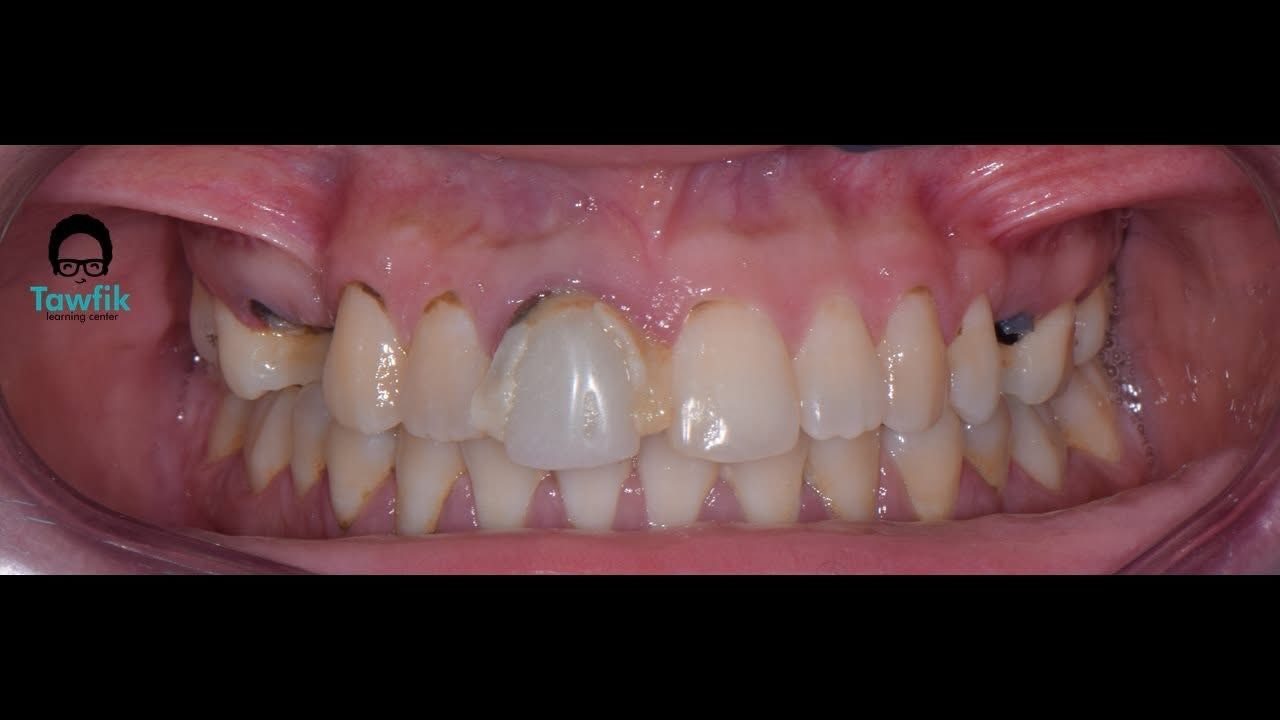
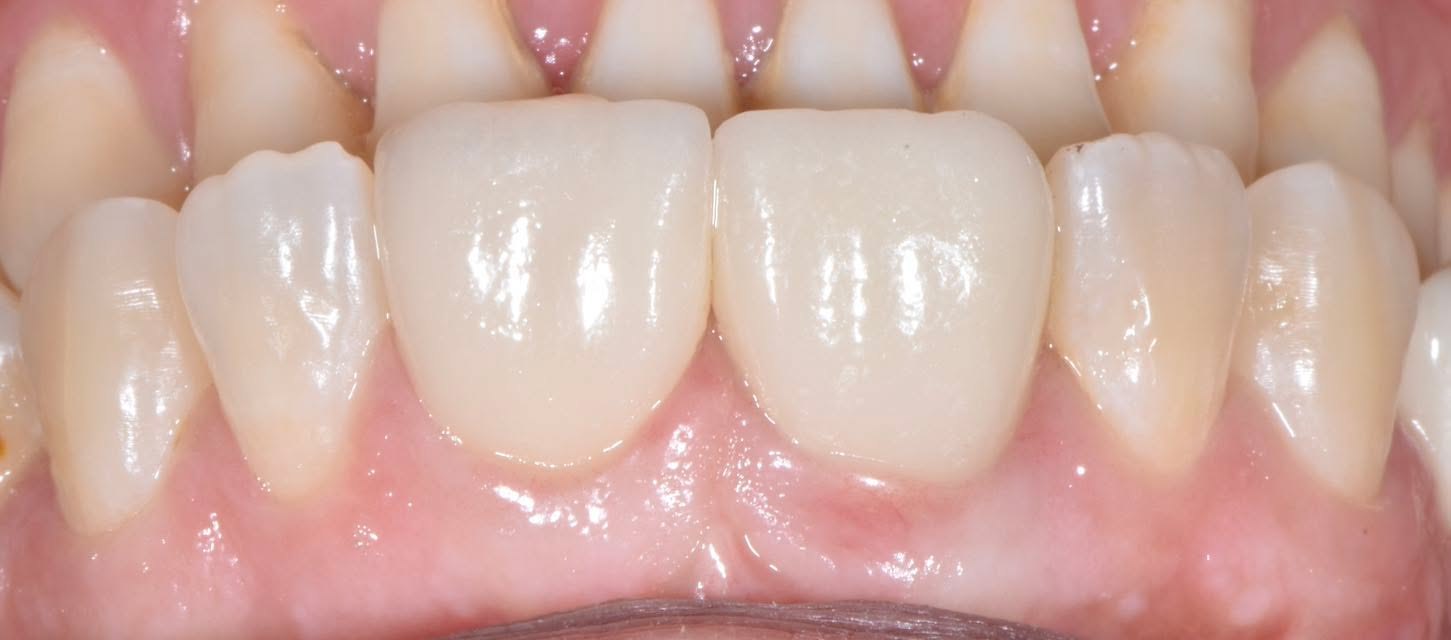
A young patient with mild crowding of the upper premolars and deep decay close to the nerve. Instead of treating each problem separately, we removed the decay partially to protect the nerve, then restored both premolars with composite in a way that redistributed the space between them. Seven years later, the restorations are stable and both teeth are vital.
The start
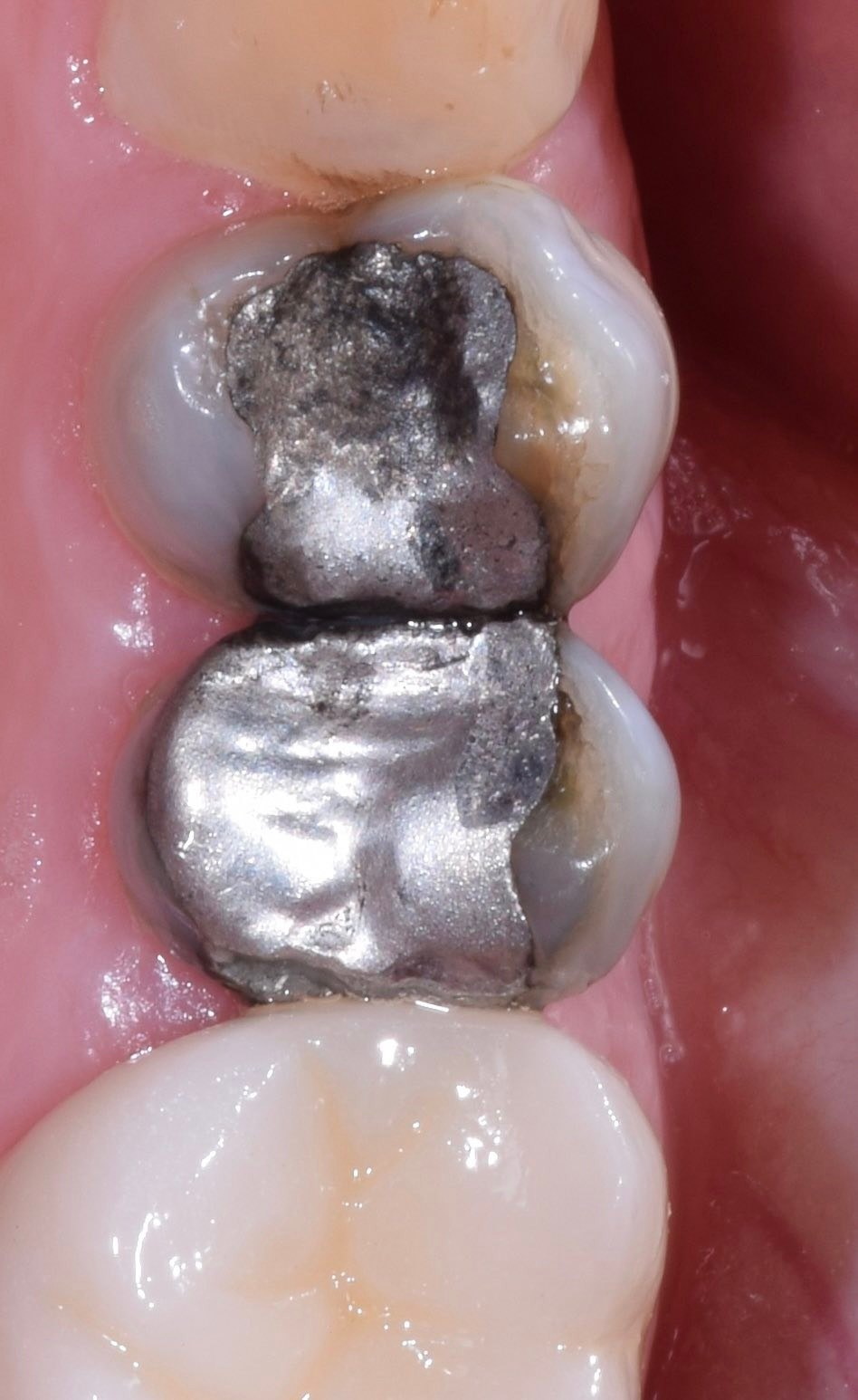
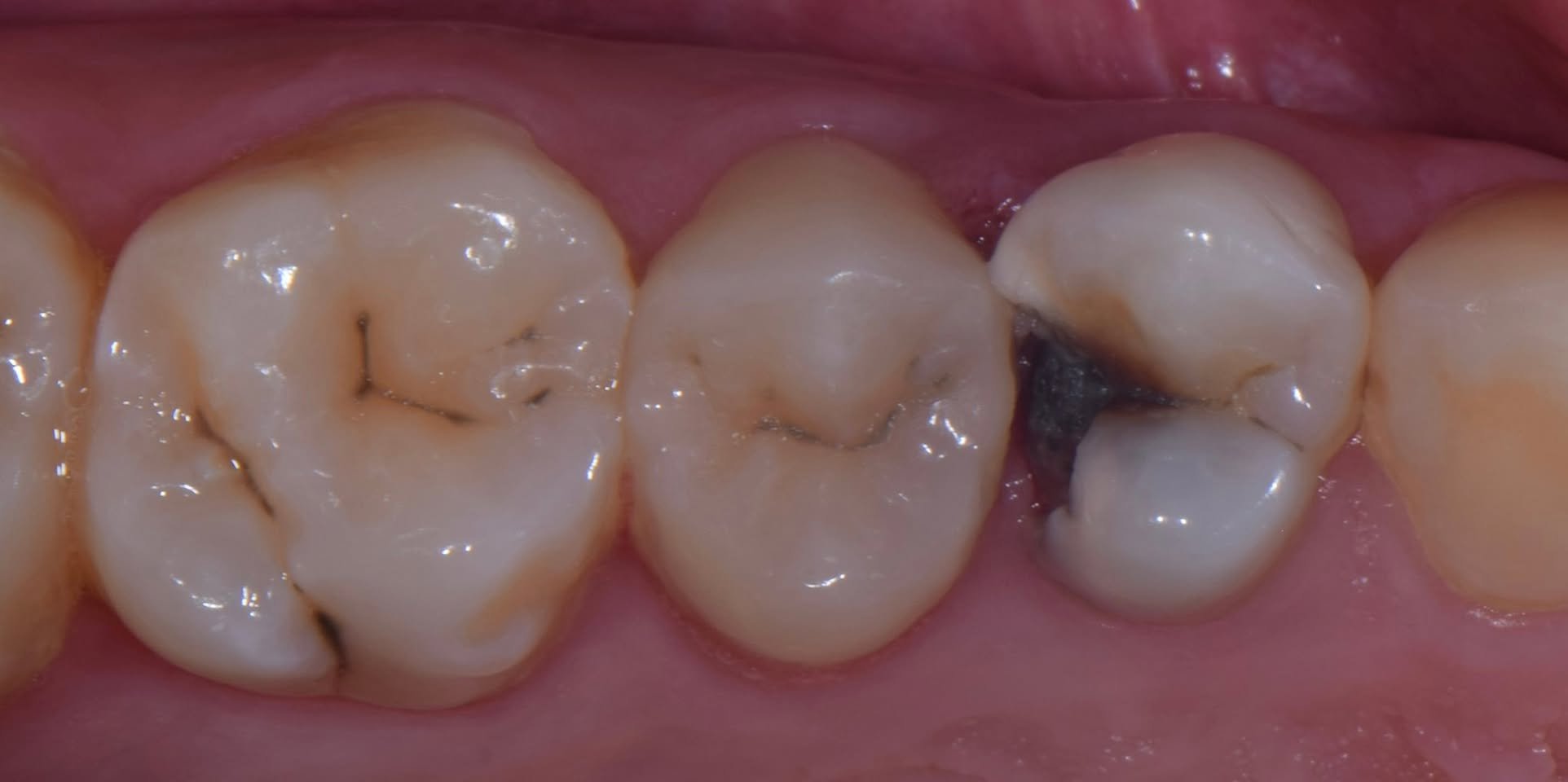
The patient was young. Her upper premolars were mildly crowded, with deep decay that, on the x-ray, came very close to the nerve.
The idea
Instead of treating the decay now and the crowding later, we solved both together. We removed the decay partially so the nerve would not be exposed, then restored the first premolar with a direct composite overlay and the second premolar with a composite filling. While building them up, we redistributed the contact points and spaces between the two teeth, improving the mild crowding without compromising tooth shape or gum health.
Seven years later
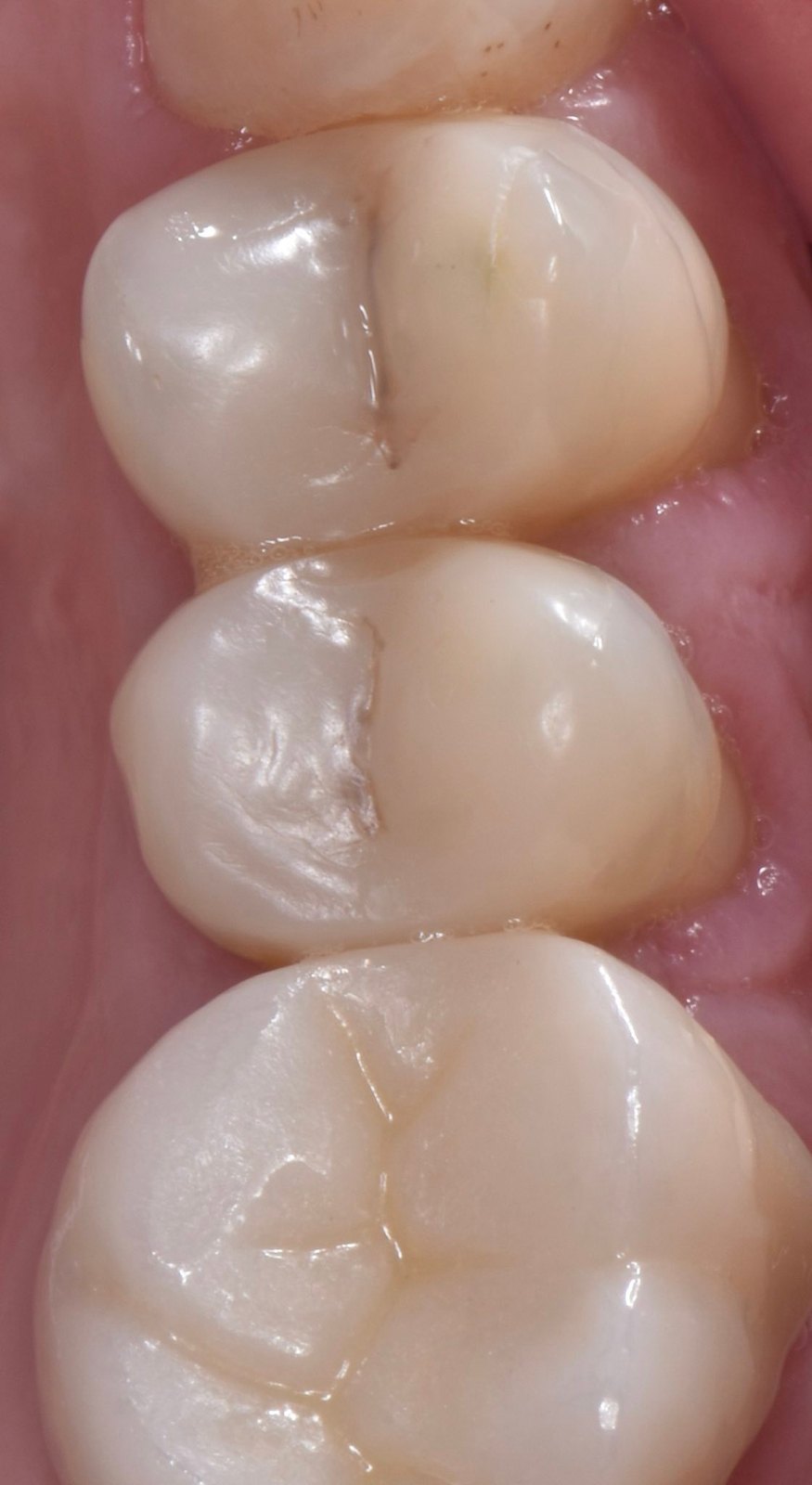
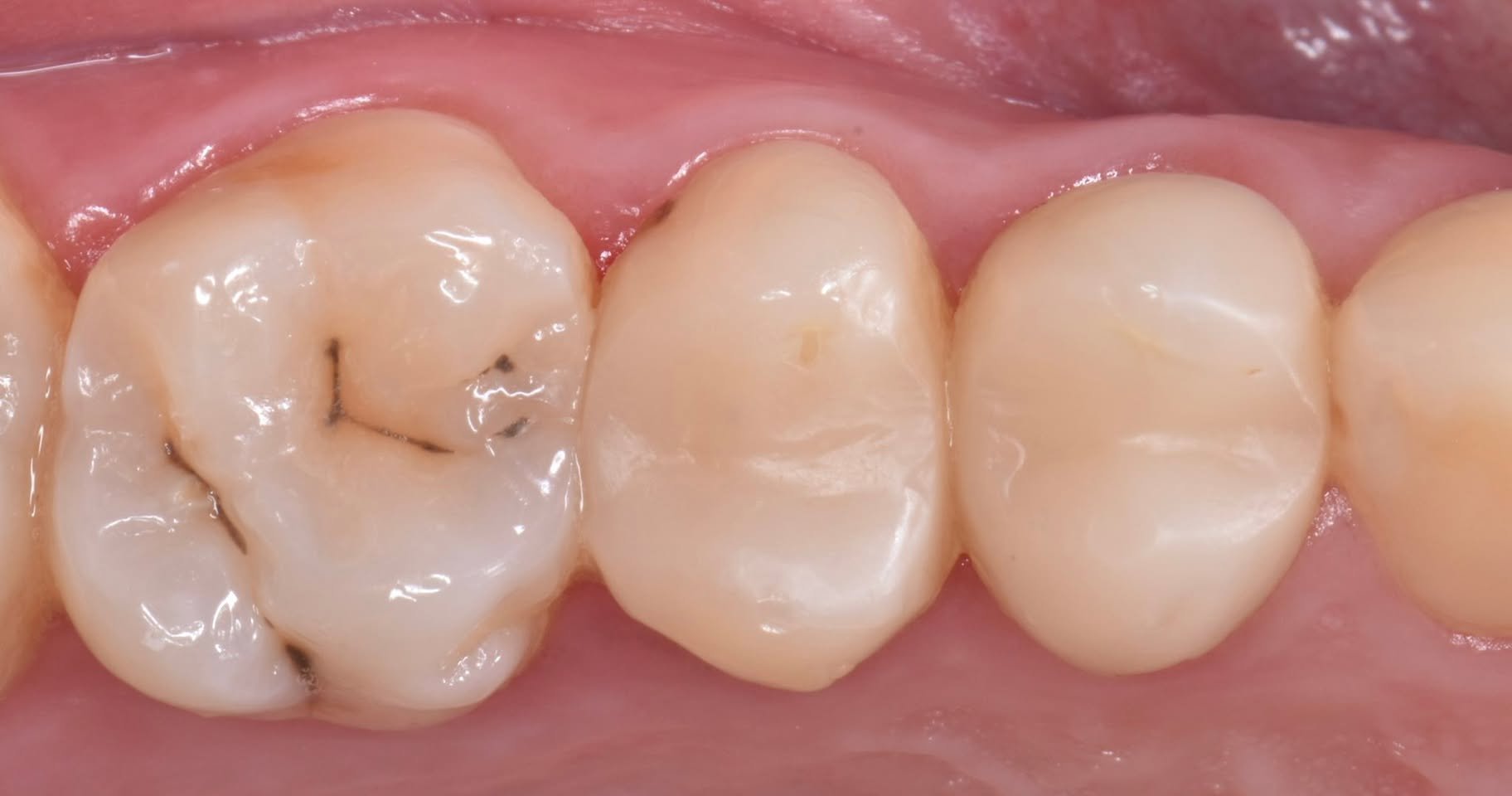
The patient has grown up, the restorations are stable, the contacts are good, the bite is stable, and both teeth are vital.
The message
Composite does not treat crowding. But every restoration is an opportunity: with a good understanding of anatomy and contacts, a dentist can sometimes improve the distribution of space while restoring, instead of treating a filling as just a replacement for missing tooth structure.
Clinical details for dentists
1 Before: deep caries on two mildly crowded upper premolars 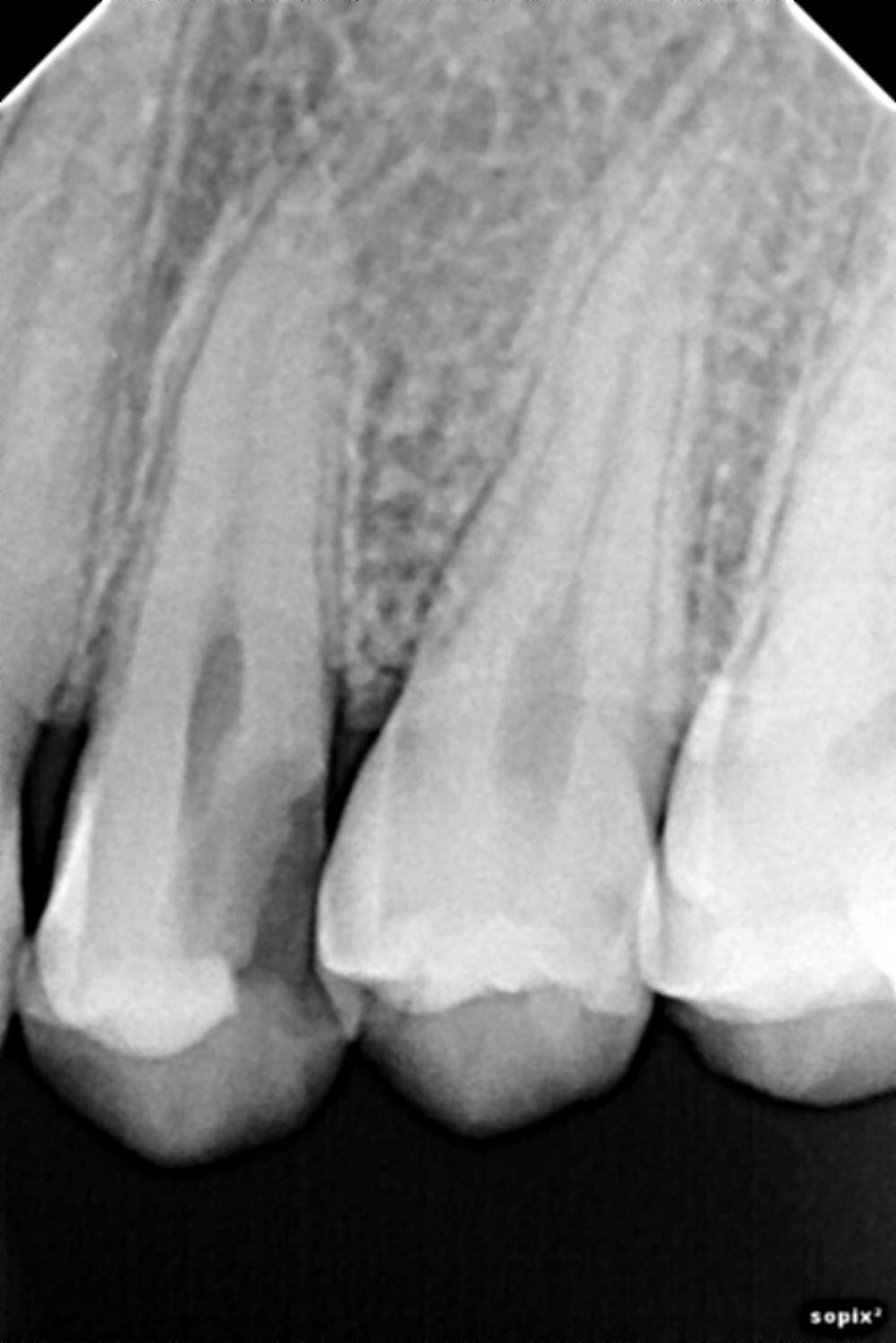
2 Pre-operative x-ray: caries close to the pulp 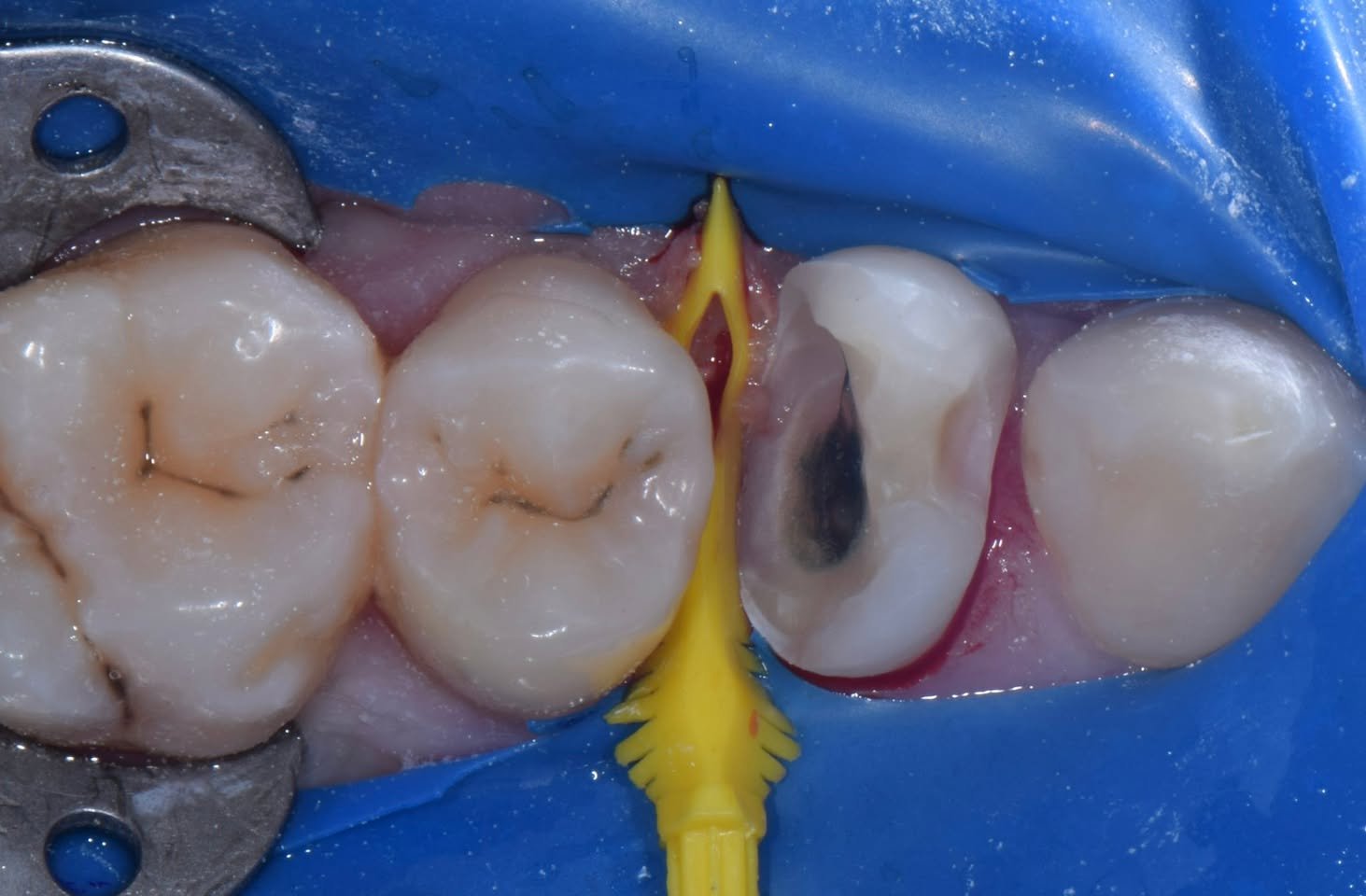
3 Partial caries removal under rubber dam 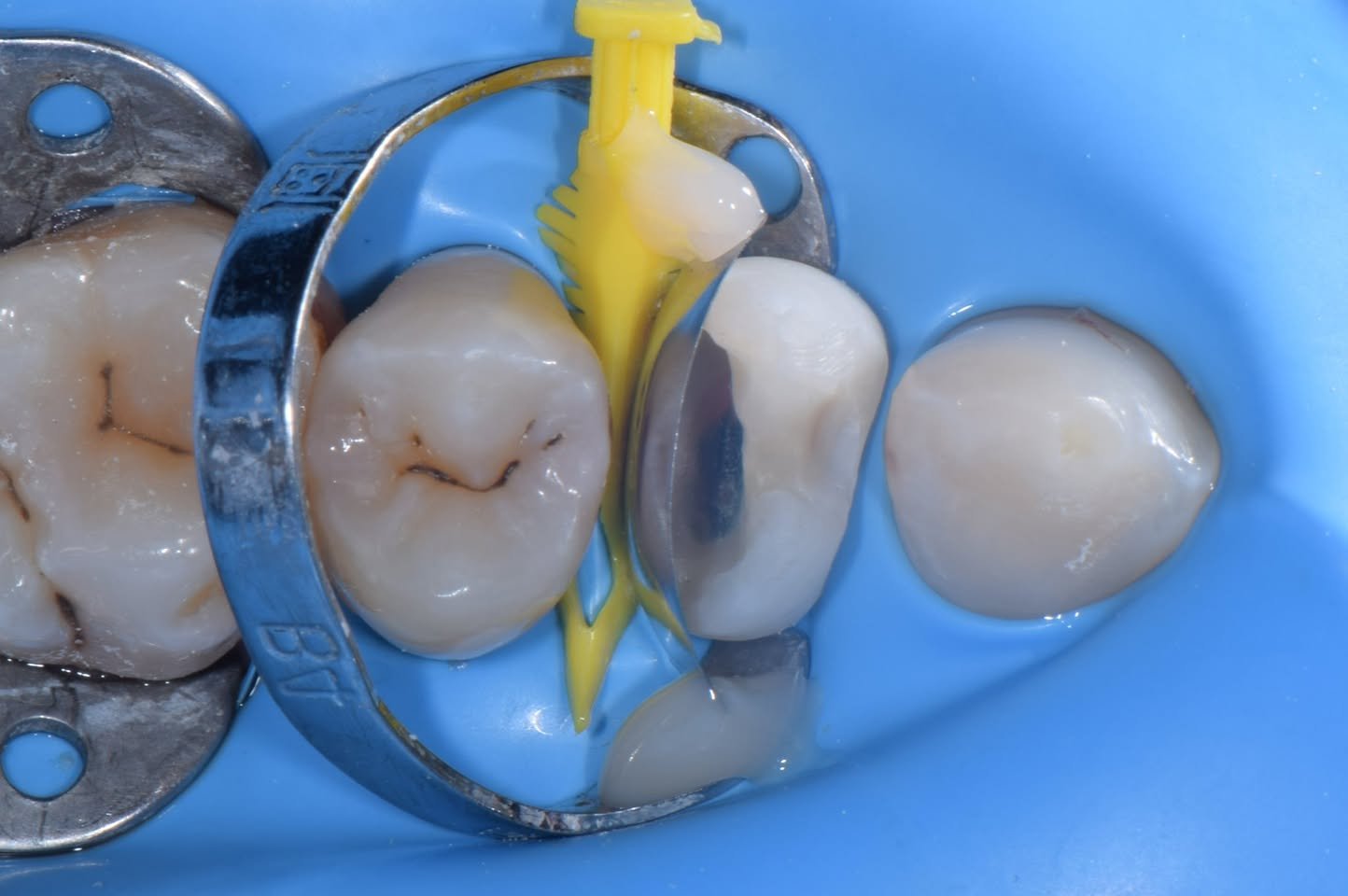
4 Sectional matrix on the first premolar 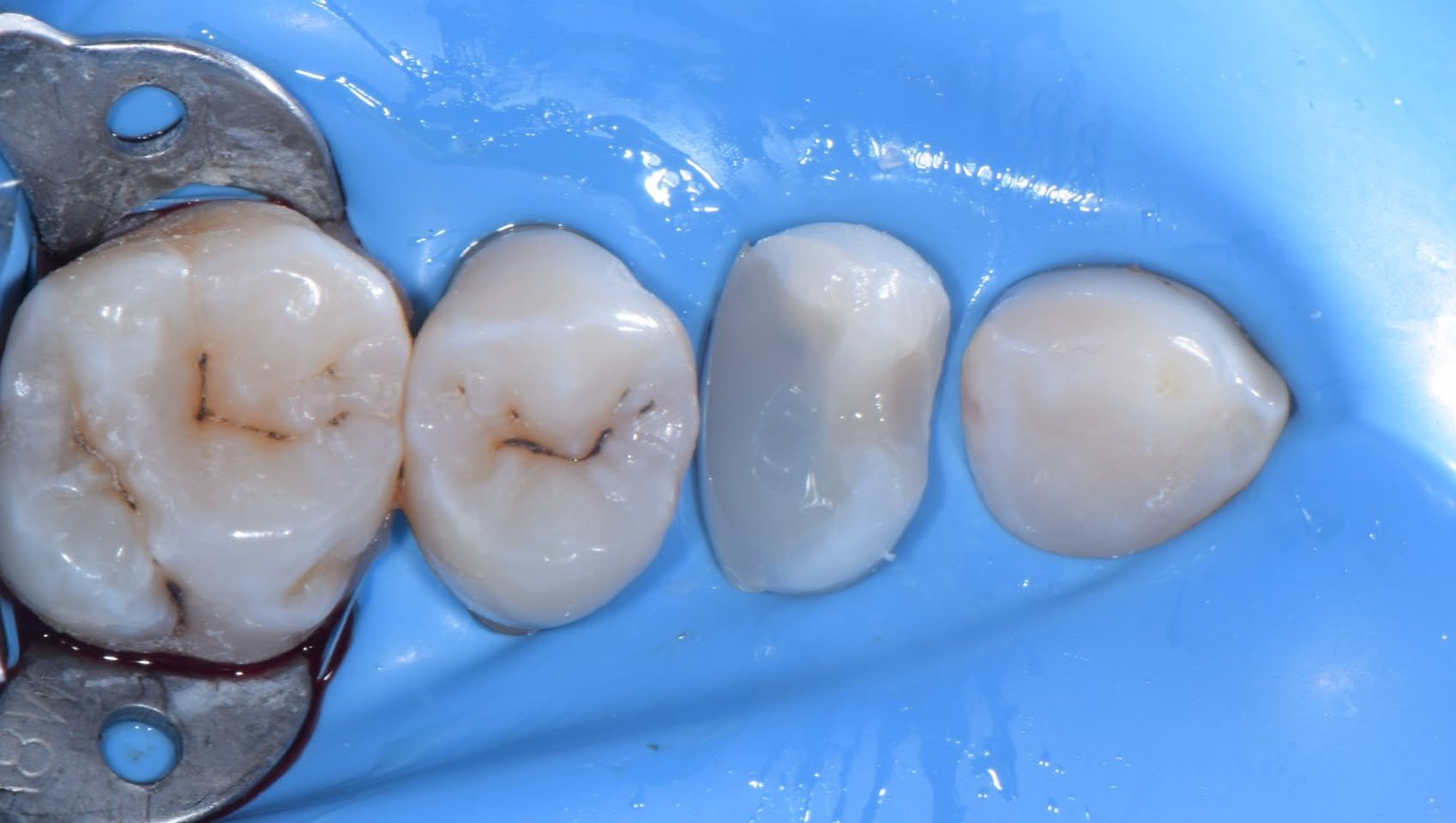
5 First premolar: direct composite overlay 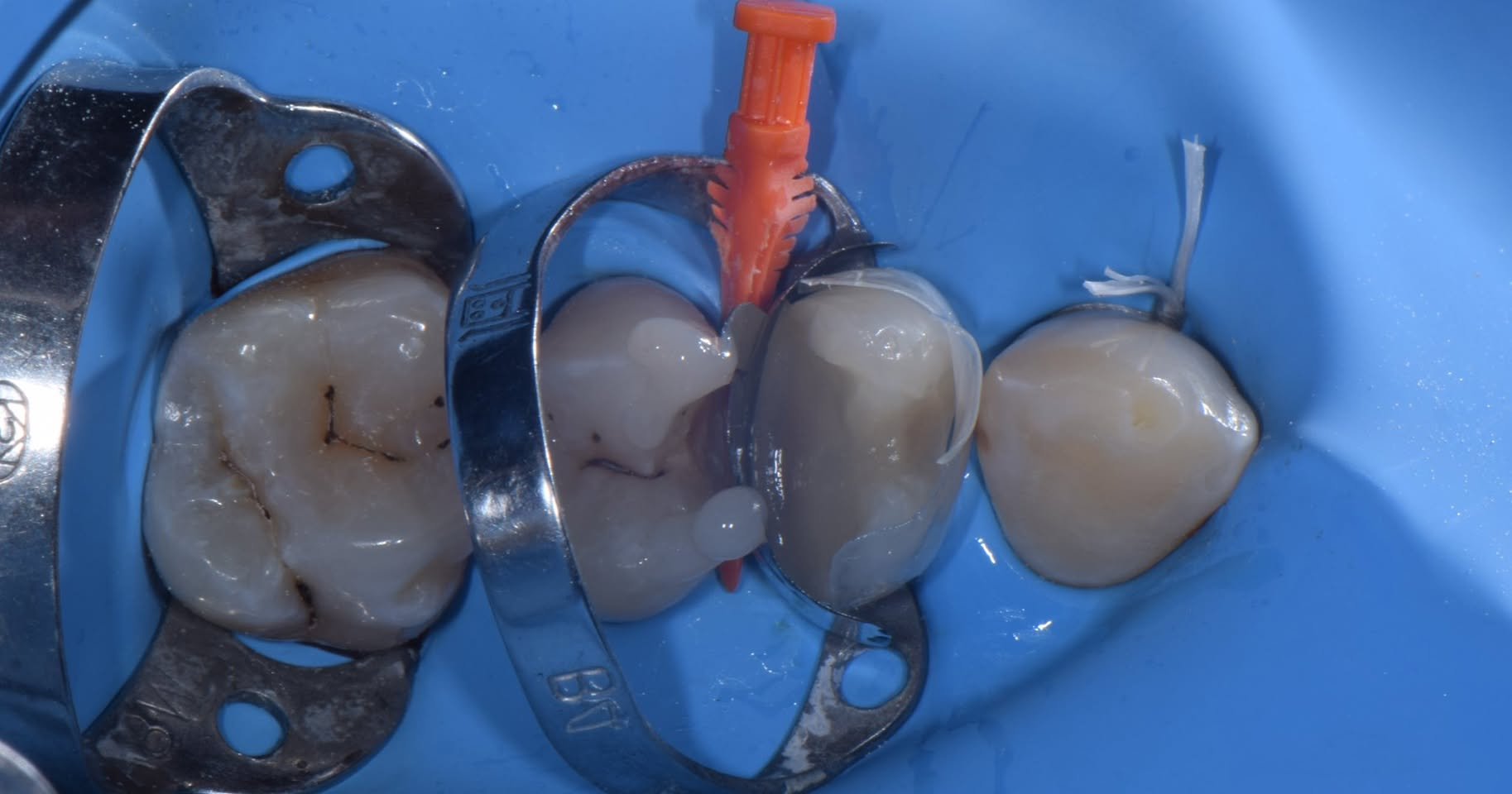
6 Second premolar: matrix and wedge for the MOD 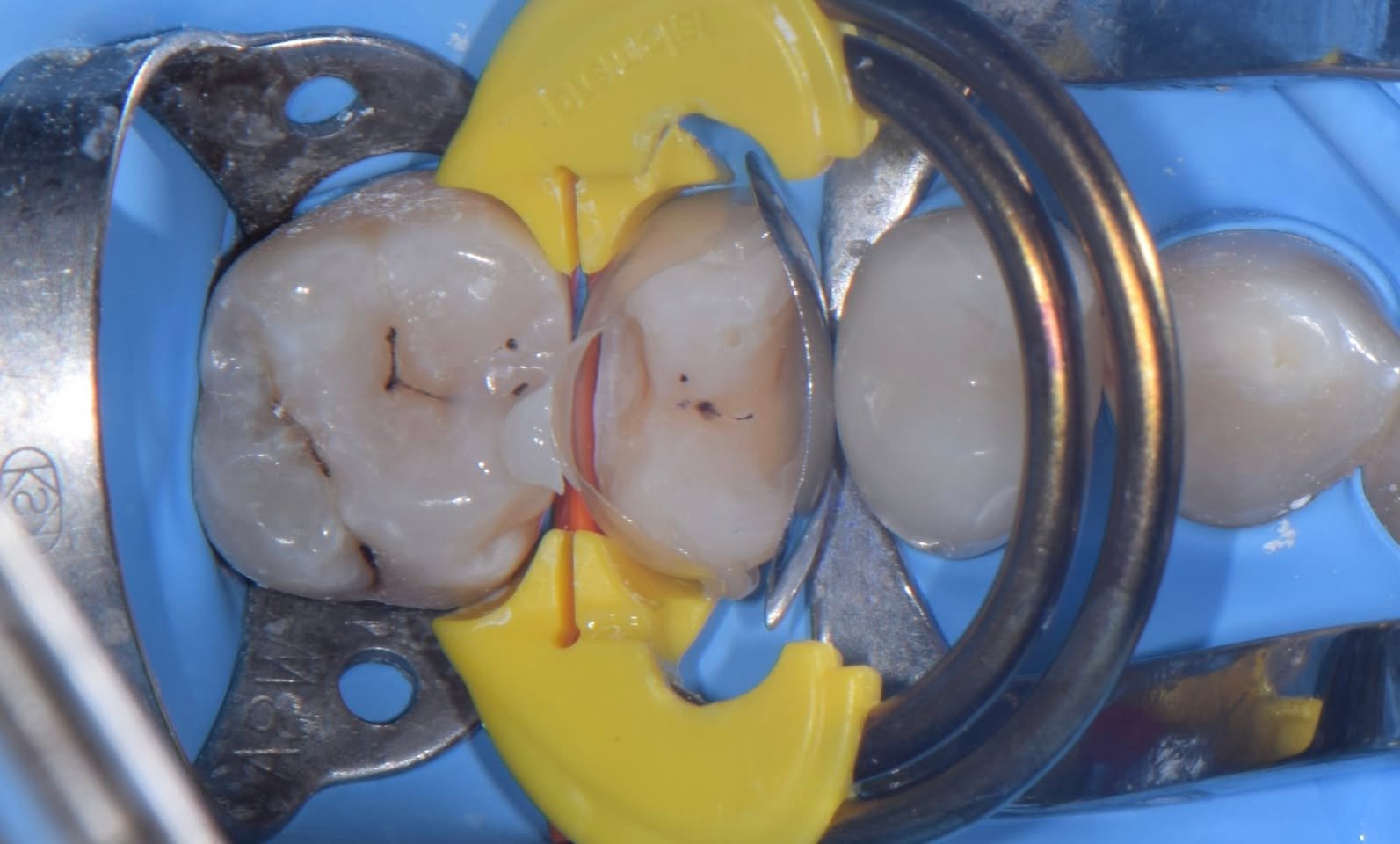
7 Sectional ring to set the new contact point 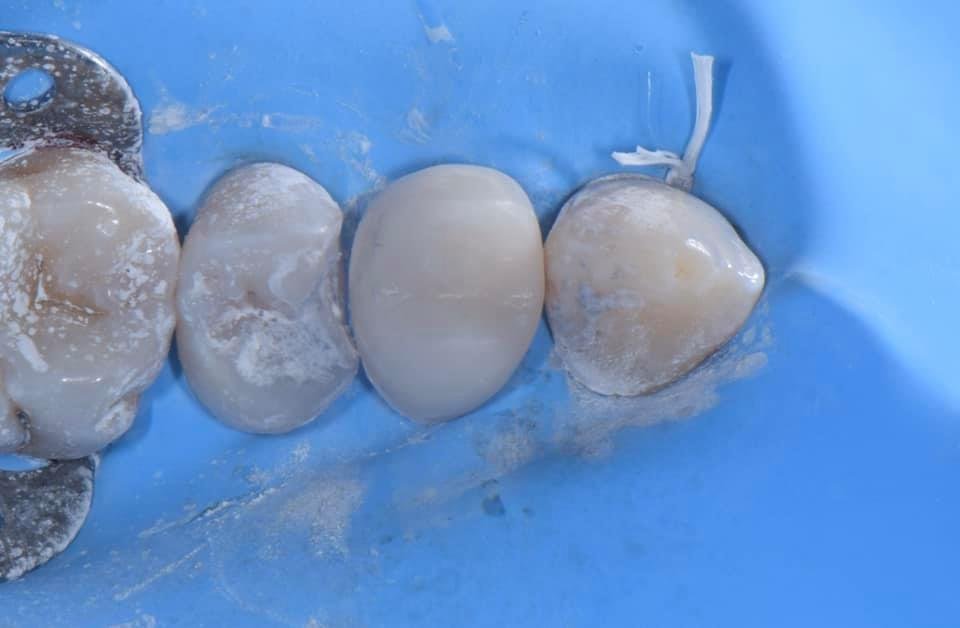
8 Both premolars restored under rubber dam 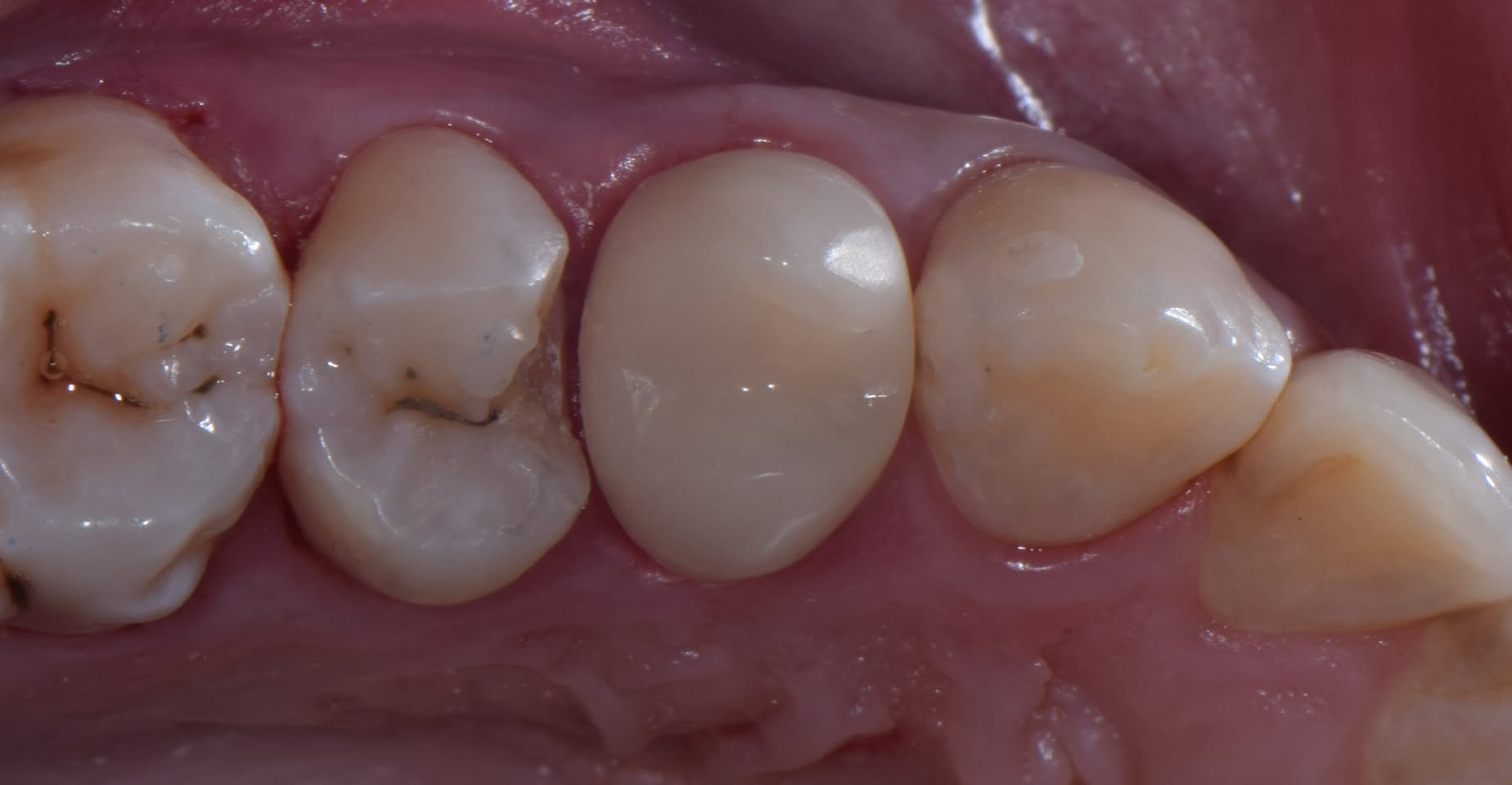
9 Immediately after treatment 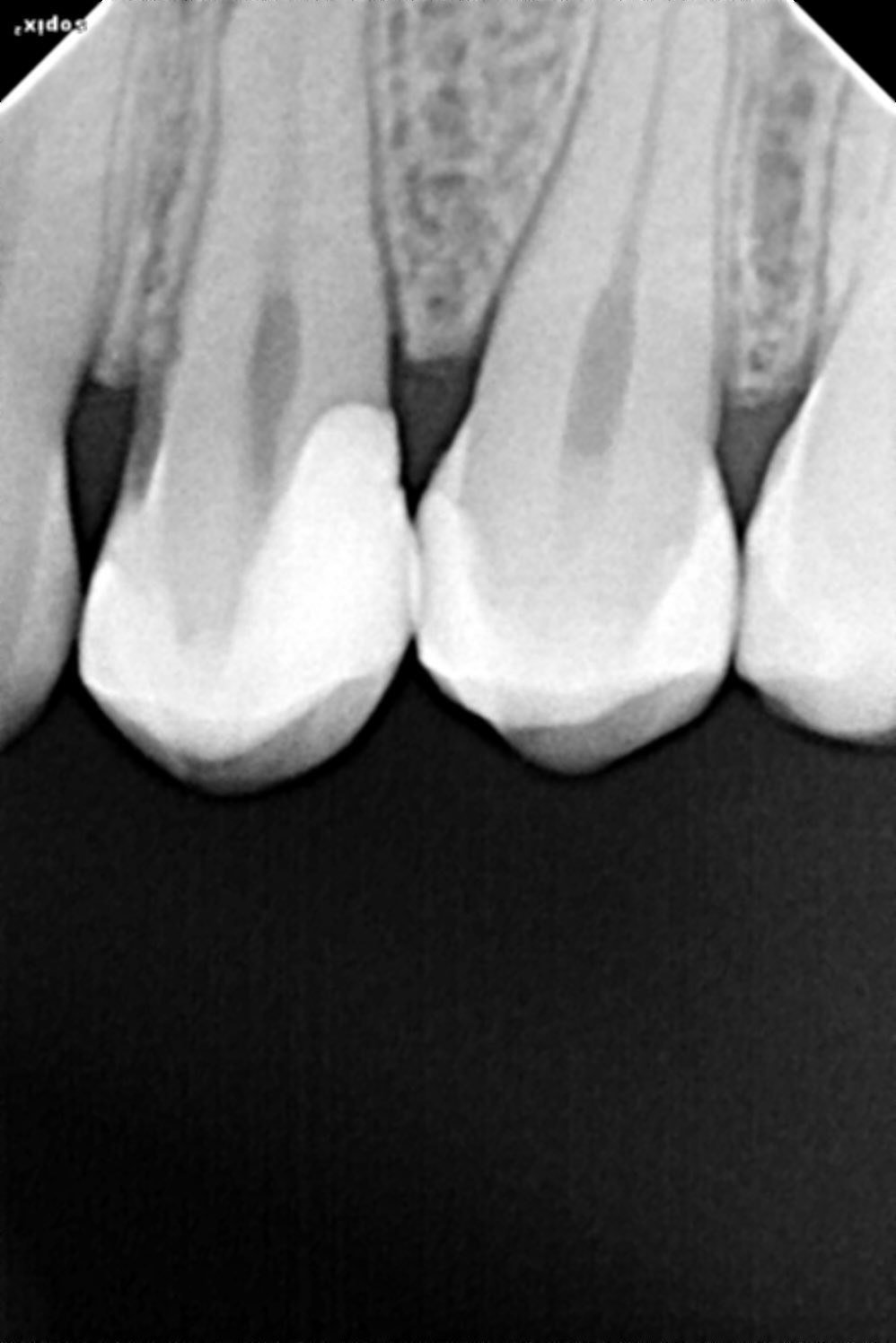
10 Post-operative x-ray 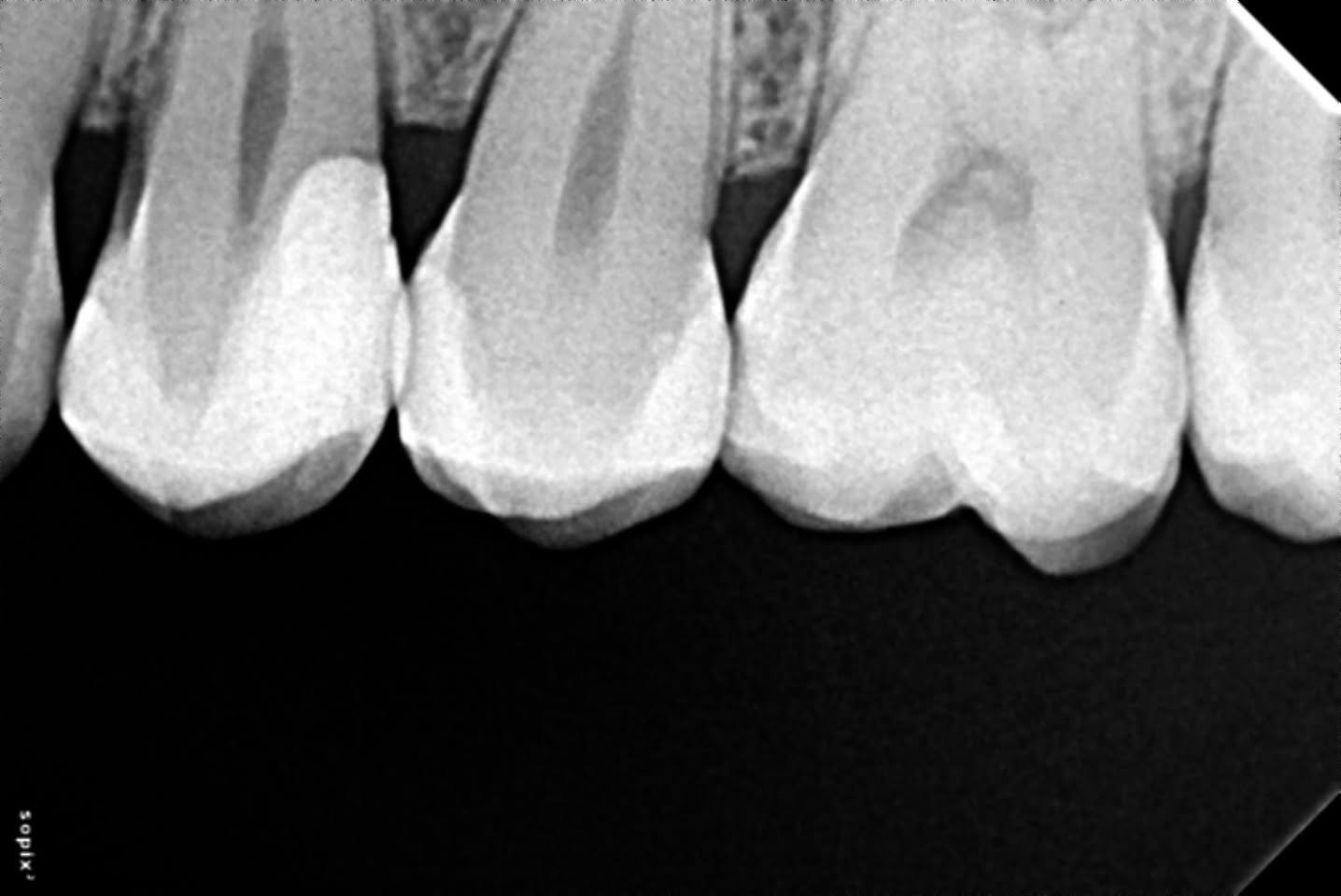
11 7-year follow-up x-ray: teeth vital, restorations intact 12 7-year follow-up
Case summary
Young patient, mild crowding of the upper premolars, deep caries approaching the pulp on both teeth.
Treatment
- Partial (selective) caries removal to avoid pulp exposure.
- First premolar: direct composite overlay.
- Second premolar: MOD composite.
- Sectional matrices and rings used to redistribute contact points and interproximal space, respecting anatomy, emergence profile and periodontal health.
Follow-up
7 years: restorations stable, contacts intact, occlusion stable, teeth vital and asymptomatic.
Take-home message
Composite dentistry is not just filling: it can be restoration management. Careful contact and emergence-profile control can use each restoration to improve the arch, and long-term follow-up confirms it.
Book a Consultation
Leave your details and our team will contact you to arrange your visit — whether you live in Egypt or are travelling in for treatment.