Maryam: from age 3 to today, and why we restored her first permanent molar instead of extracting it
Maryam is my niece. I treated her at age 3 under general anaesthesia, and later her first permanent molar came in with a challenging lesion. Extraction was an option; we restored it with composite, and after 10 years of follow-up it is still functioning.

Maryam is my niece
Maryam was my patient before she knew what a dentist was. I first treated her at 3, under general anaesthesia: she had caries in her primary molars, and we restored them with stainless steel crowns.
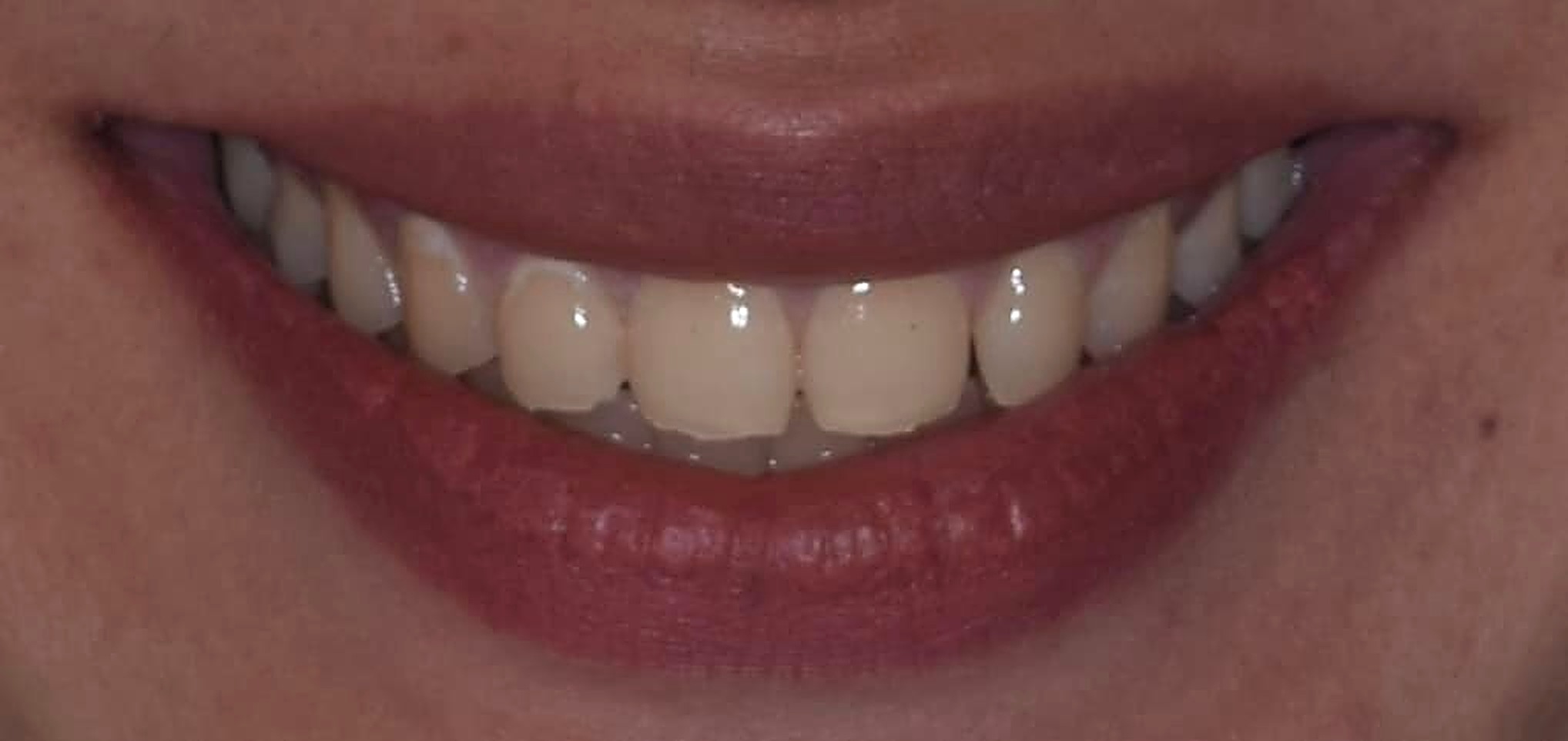
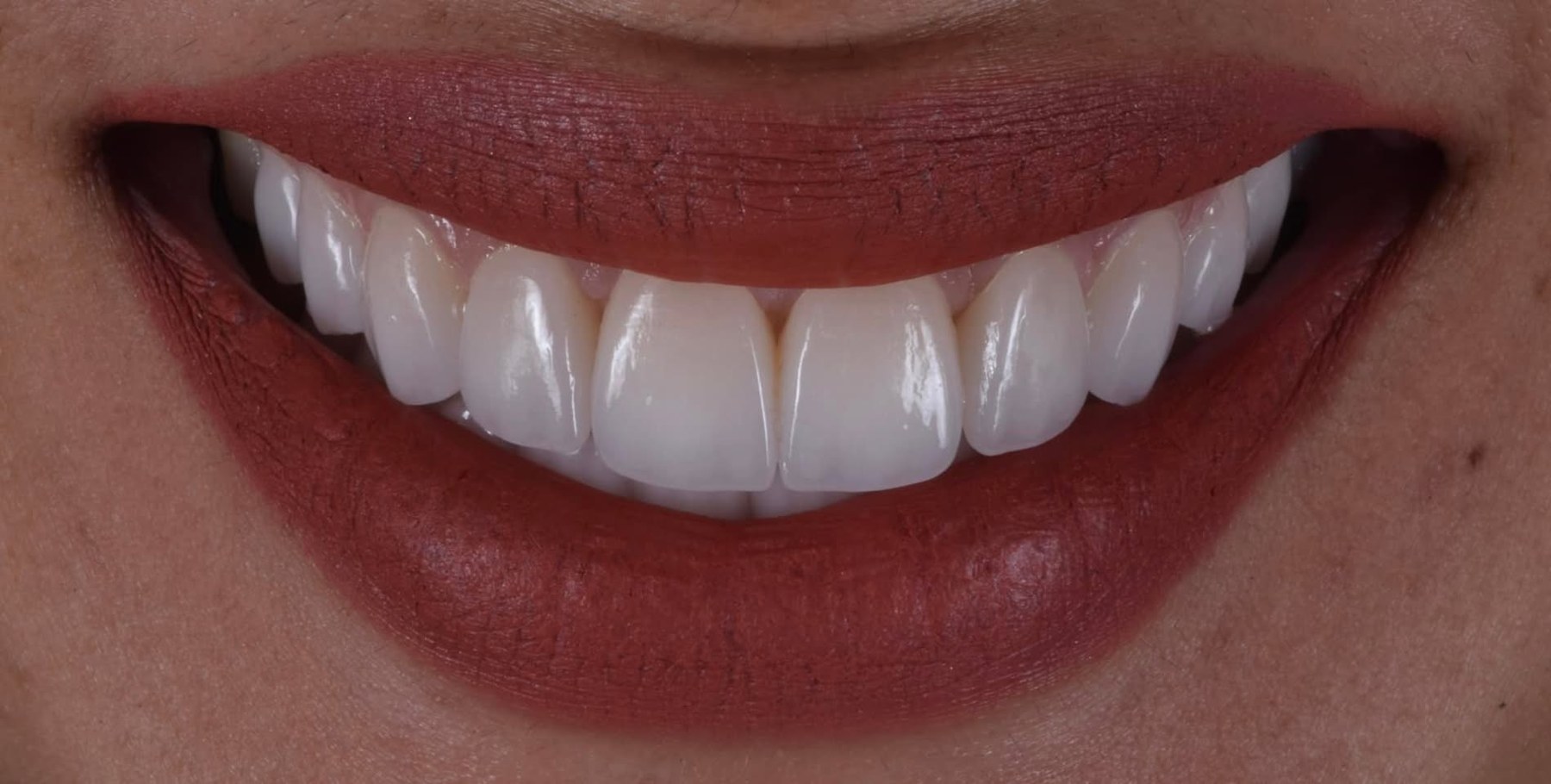
The photo shows three moments: Maryam as a little girl in my arms, then as a teenager in the clinic, then as a young woman at her latest follow-up. Three pictures, ten years of trust.
Treating a child from your own family carries a different weight. You are not just treating a tooth: you know you will watch her grow up and see the result of your decision at every family gathering. Either you trust what you are doing, or you do not do it.
The first permanent molar
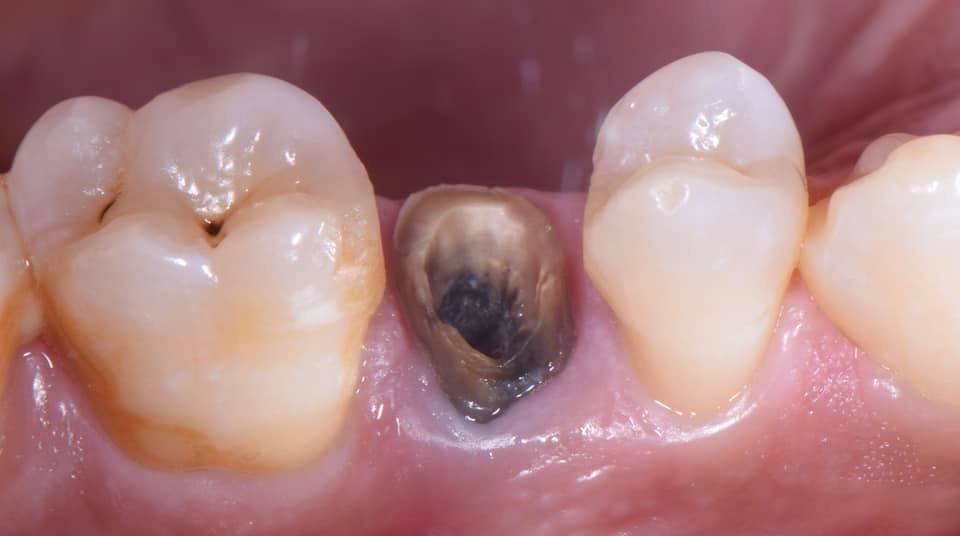
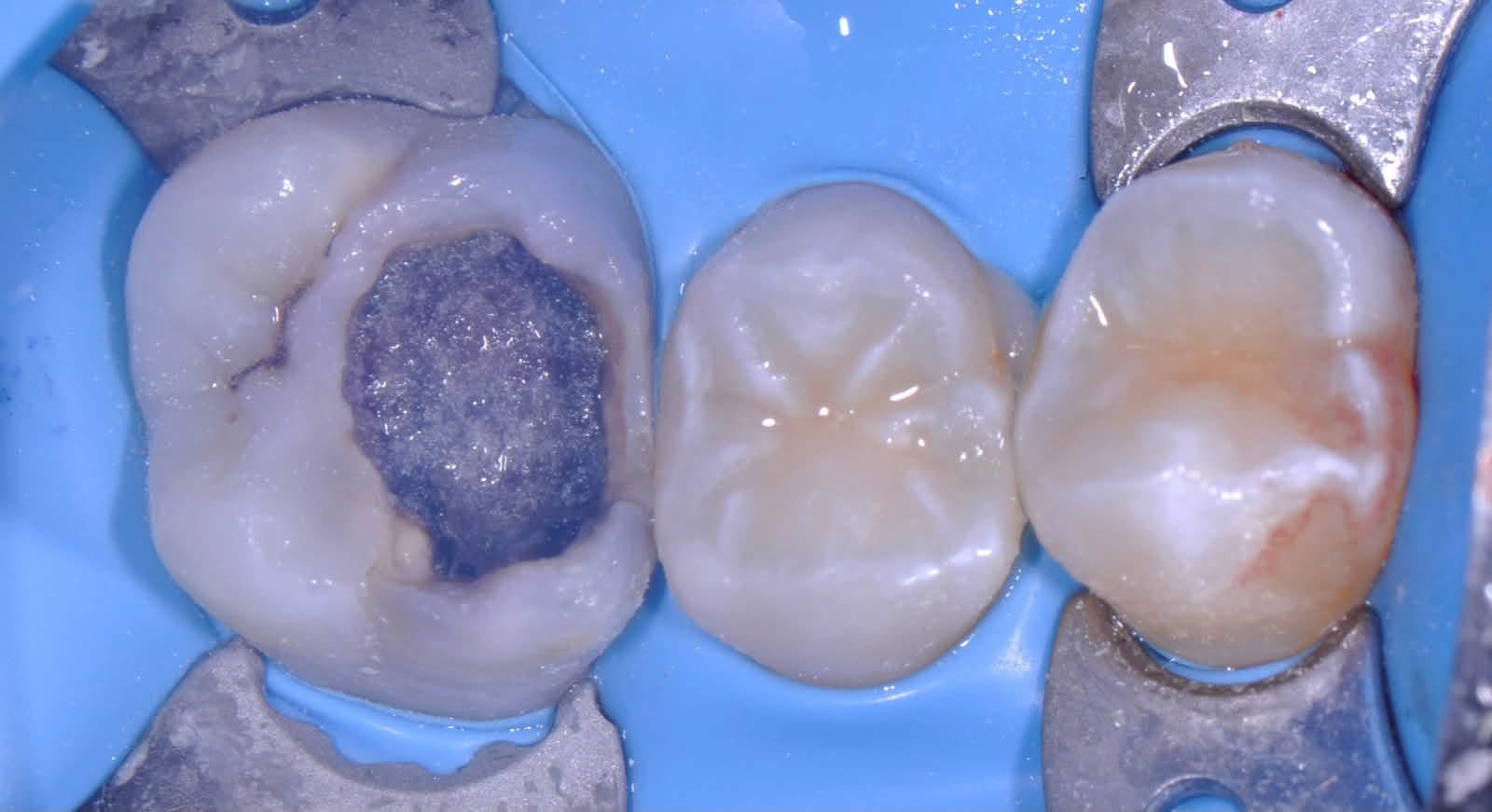
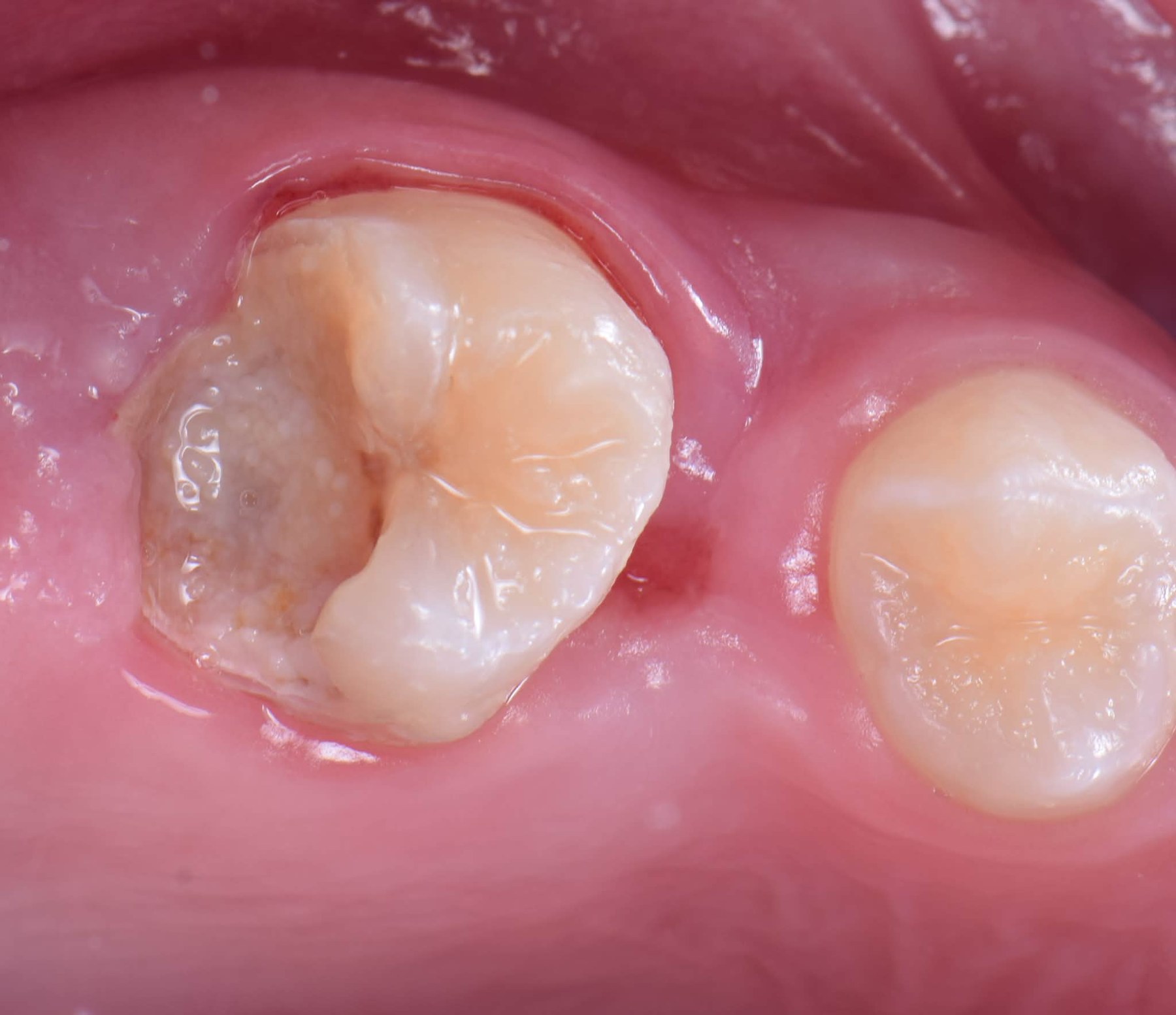
Years later, in the mixed dentition, her first permanent molar became the challenge.
It was not hopeless and not completely destroyed, but it was very demanding if the goal was to stay conservative and keep as much tooth structure as possible.
More than one opinion
- One dentist might choose root canal treatment.
- Another might prefer a stainless steel crown.
- A third might lean towards extraction, not trusting composite in a case like this.
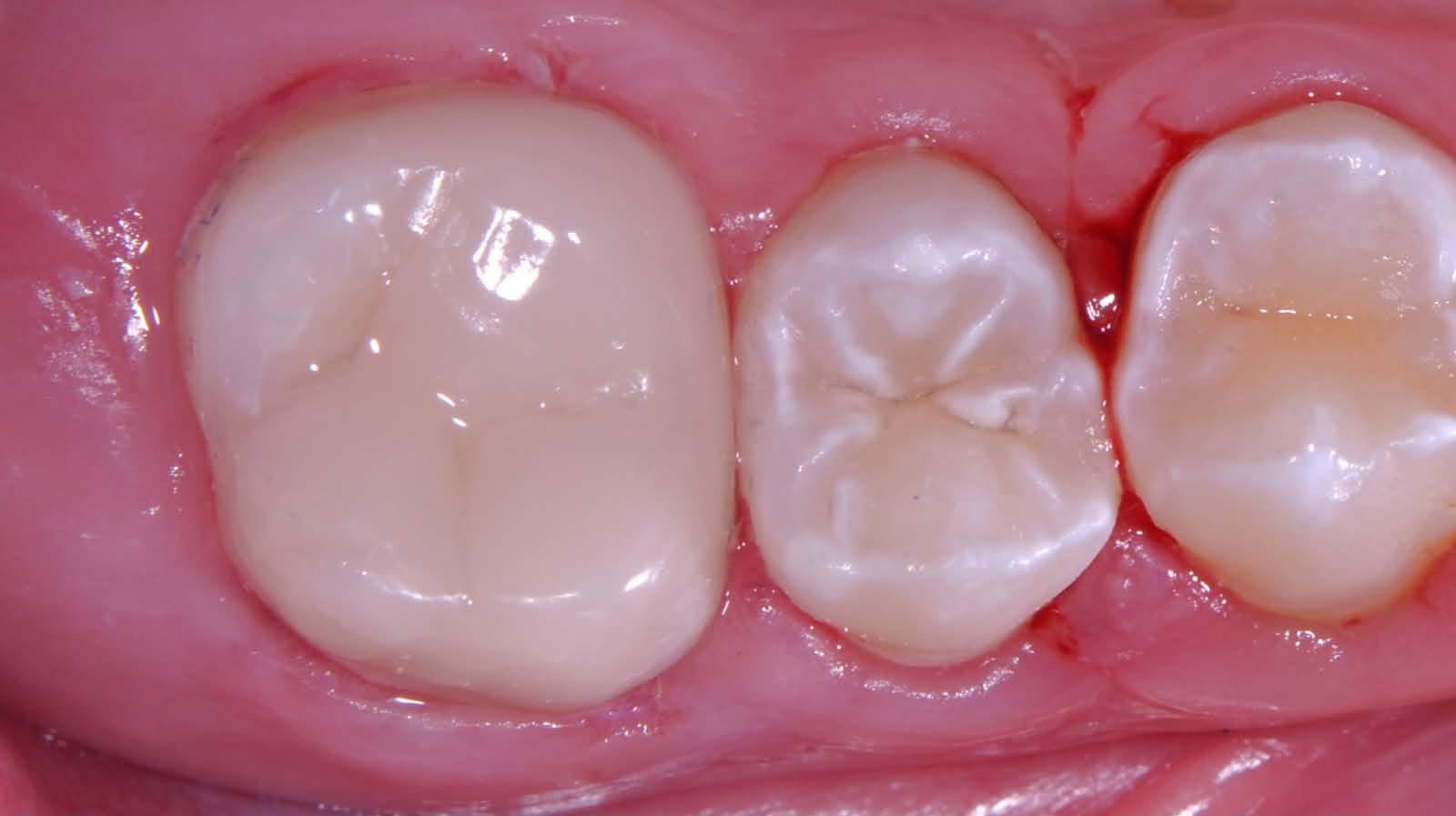
We chose a direct composite restoration, with no pulp therapy, with proper isolation and matrixing, preserving as much natural tooth as possible.
Today
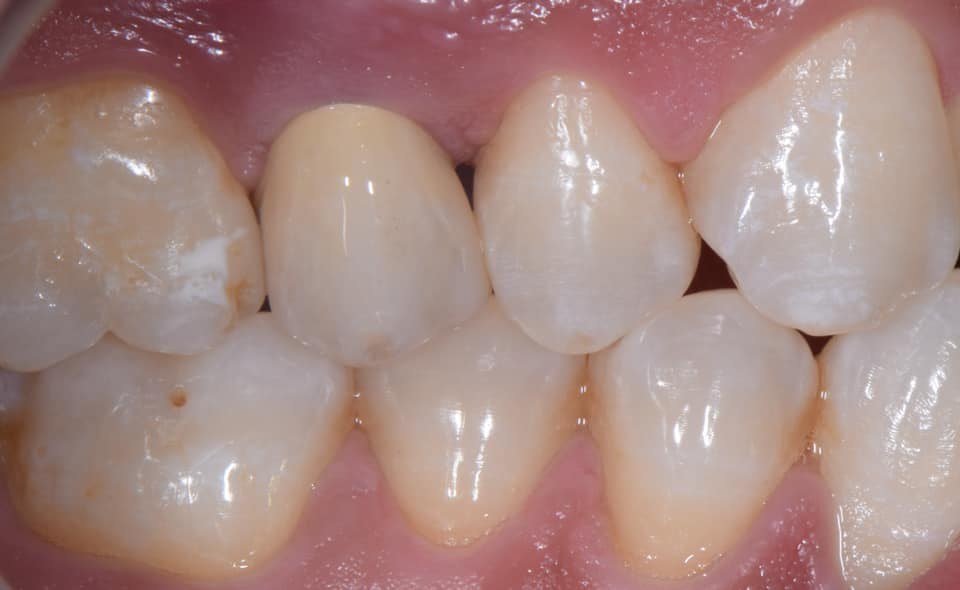
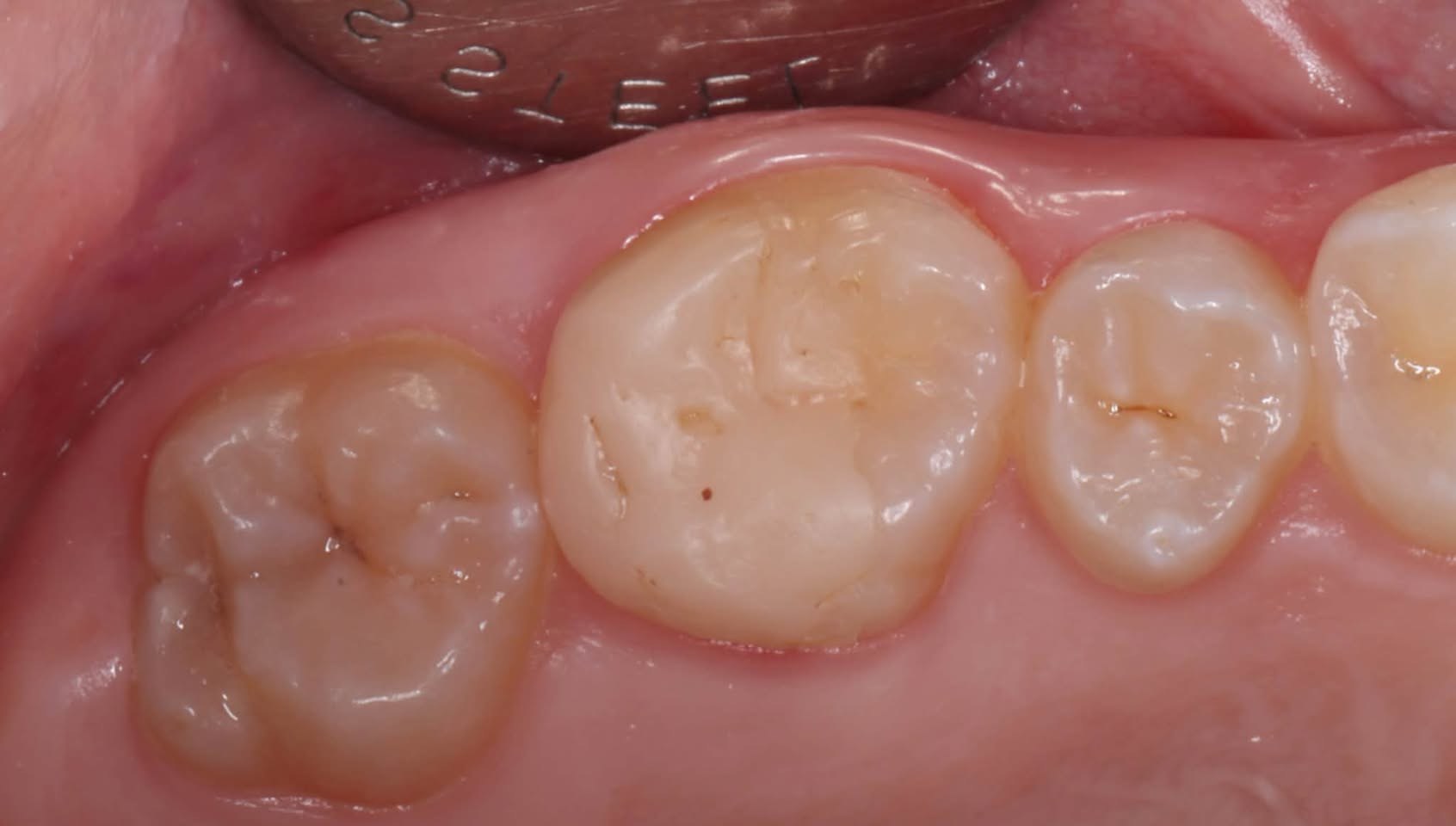
After 10 years of follow-up, the tooth is still there and functioning.
Why I share this
The real question is not "extract or restore?" but: how far do we trust our restorative dentistry before we give up a natural tooth?
If a tooth is restorable and we trust the treatment we provide, it should not be extracted just because restoring it is difficult.
Clinical details for dentists
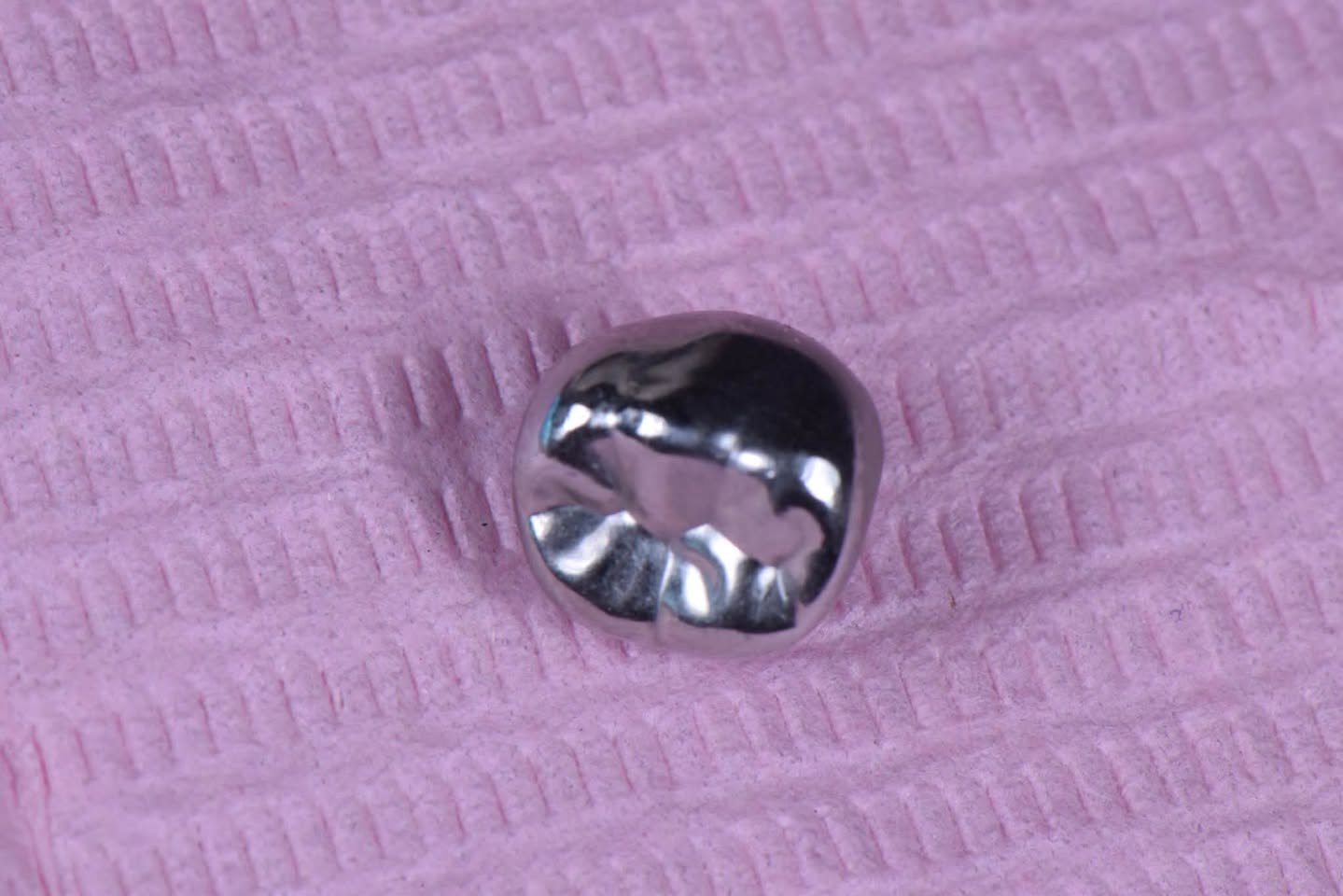
1 Age 3: stainless steel crown used on a primary molar under general anaesthesia 2 First permanent molar in the mixed dentition: the starting point 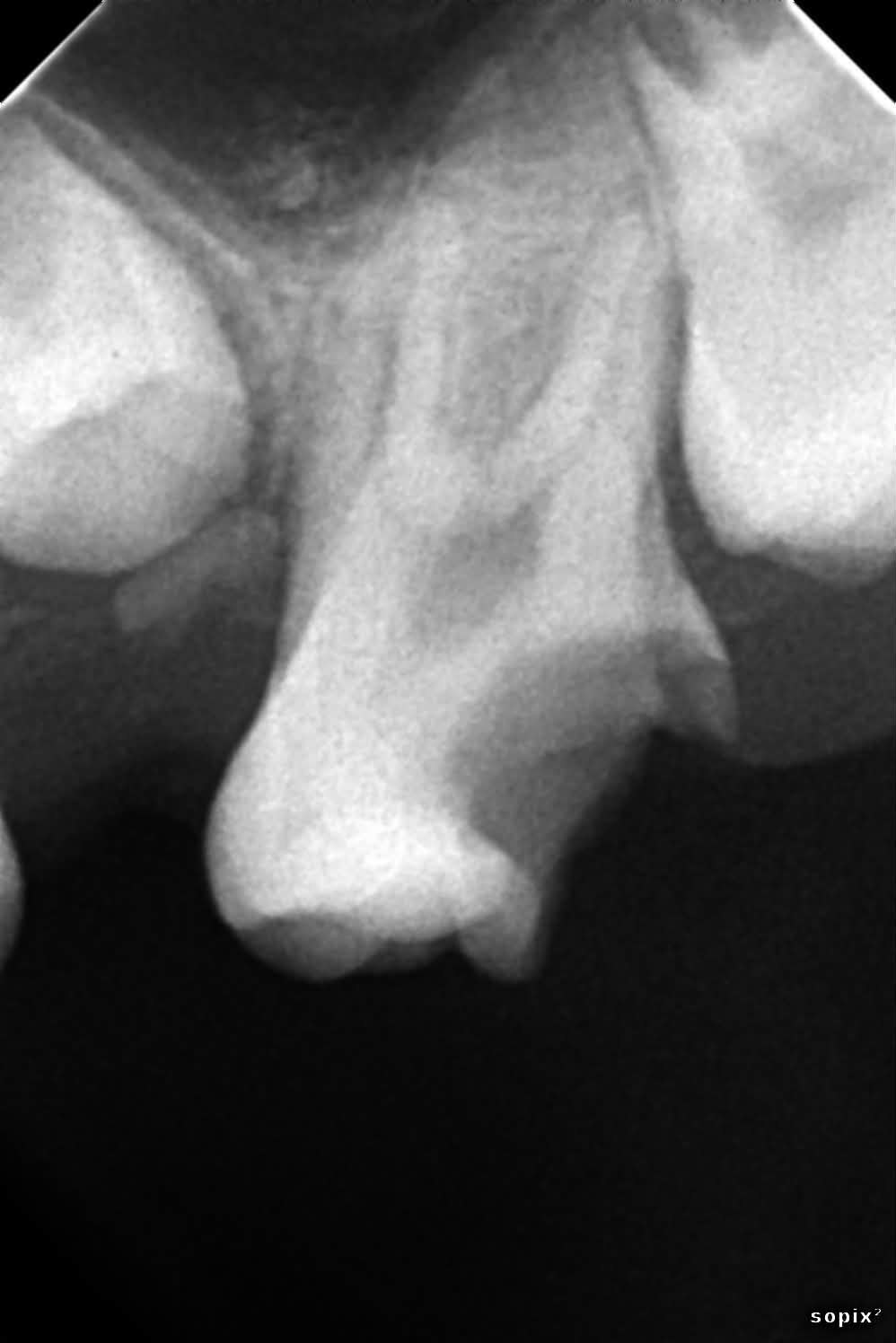
3 Pre-operative radiograph 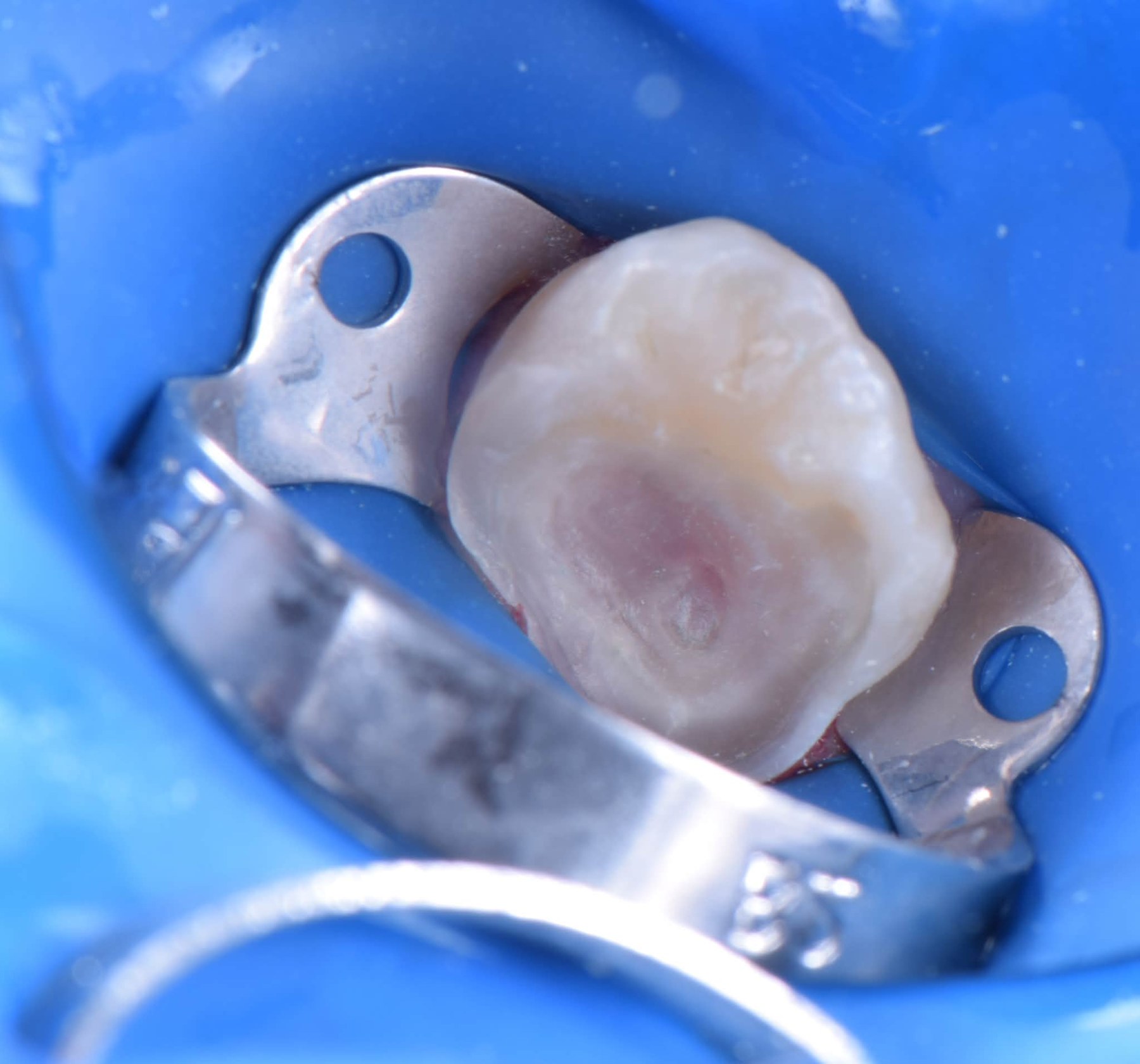
4 Rubber dam isolation and matrix band 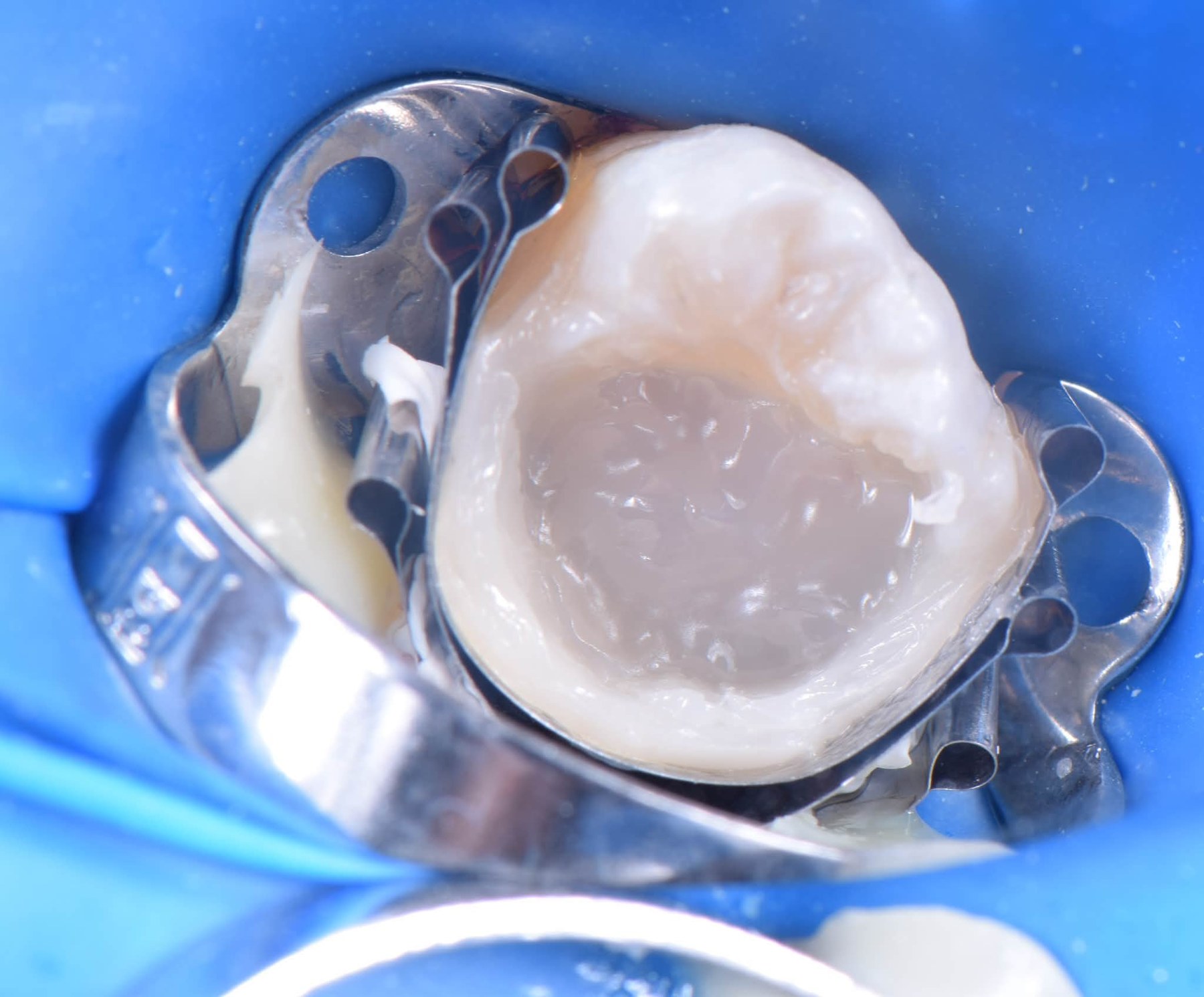
5 Composite build-up inside the matrix 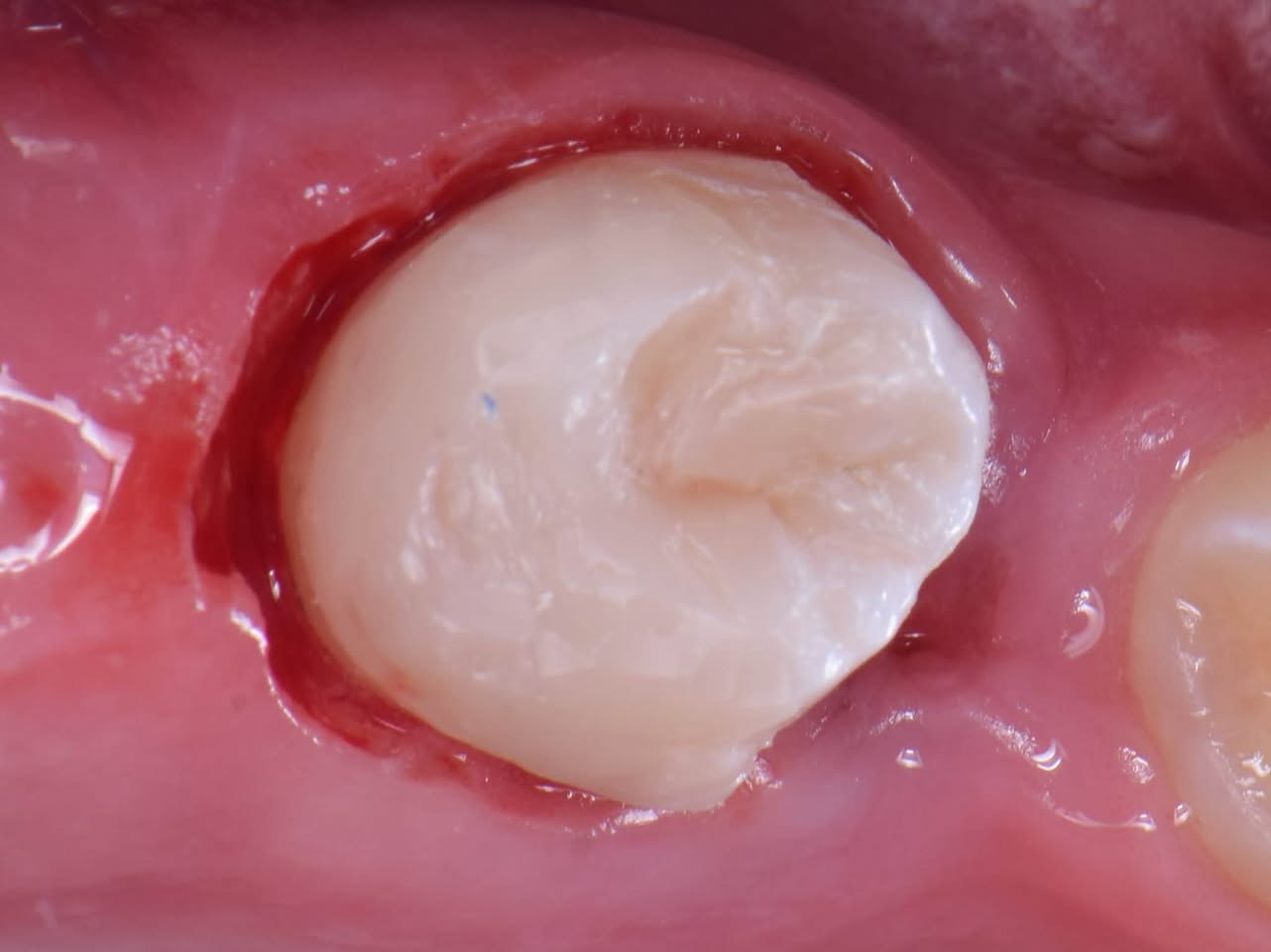
6 Final composite restoration 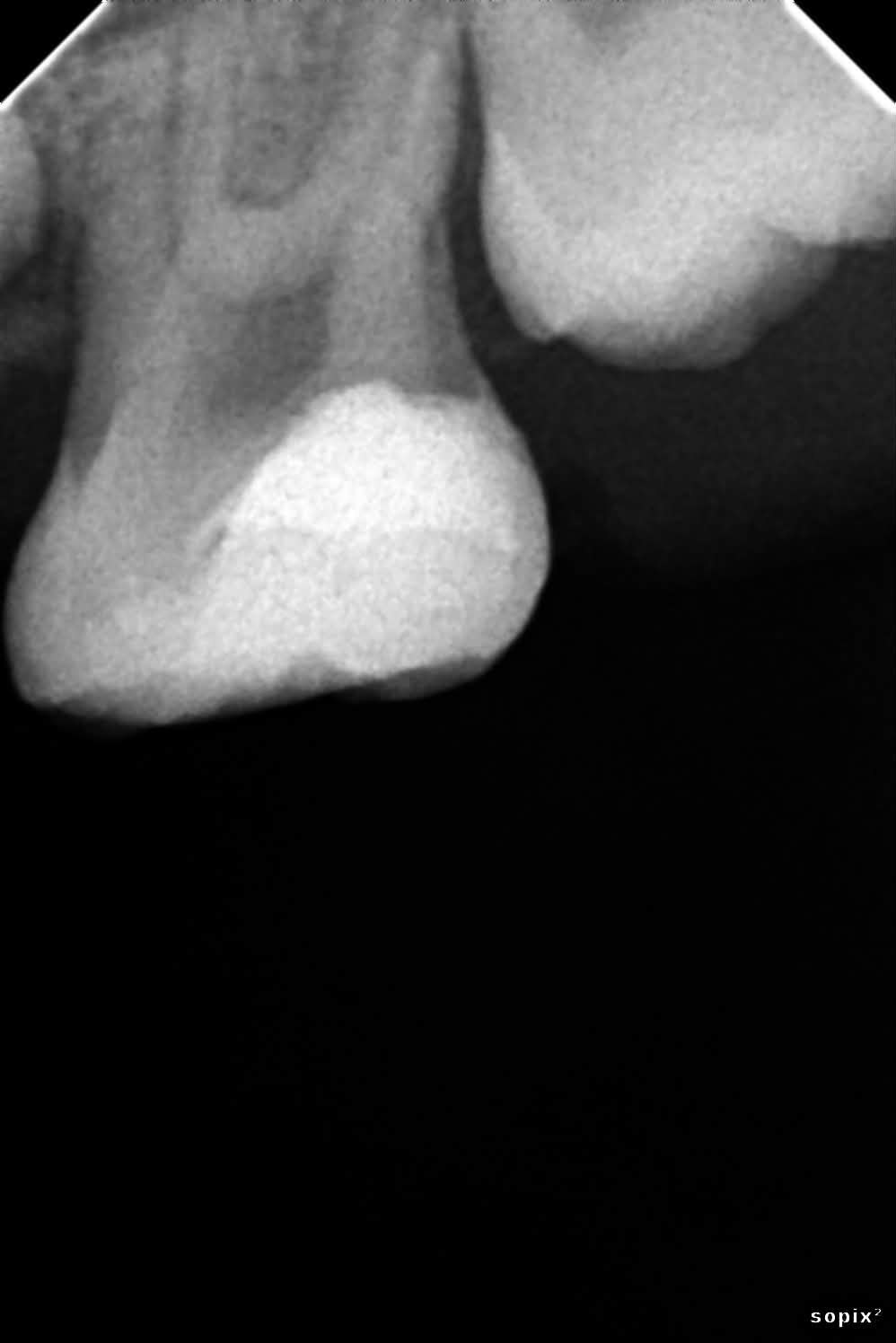
7 Post-operative radiograph 8 10-year follow-up: the restoration in function 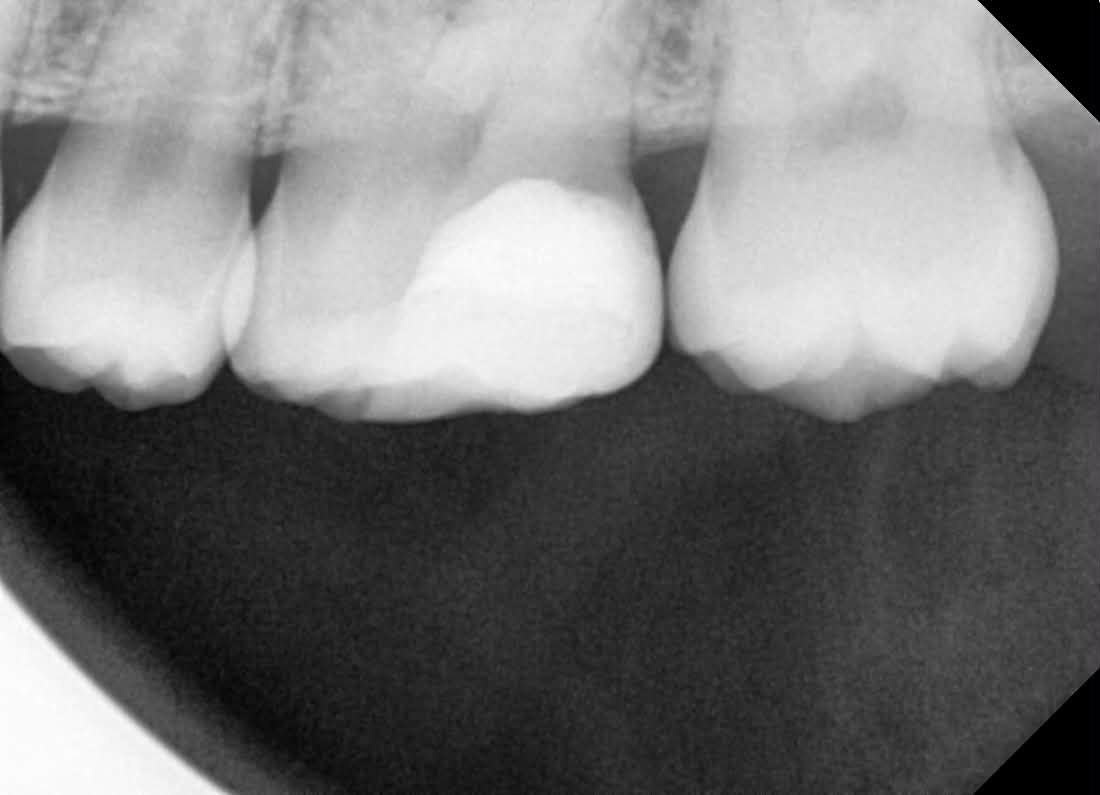
9 10-year follow-up radiograph 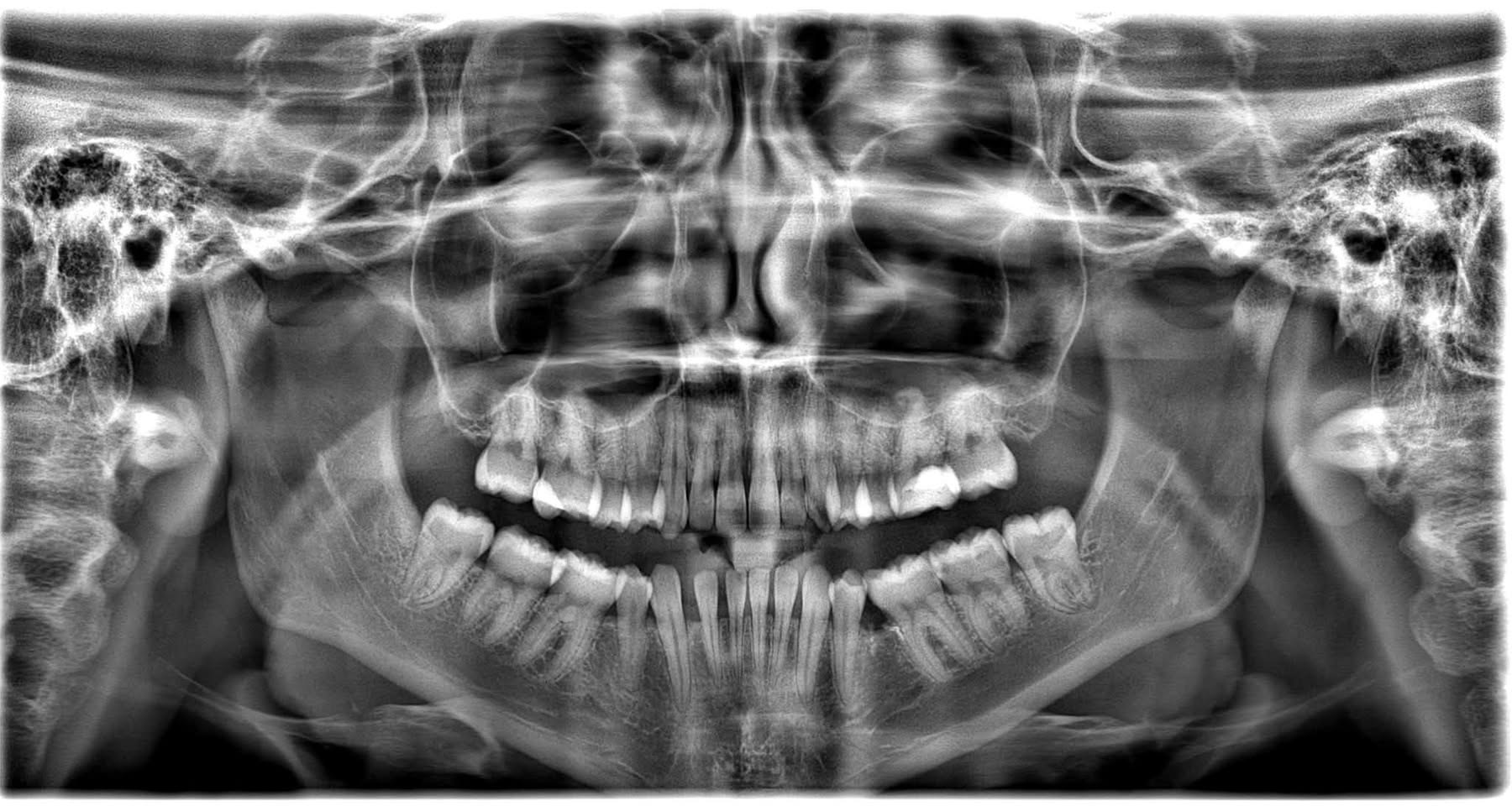
10 Panoramic radiograph at follow-up
Case summary
Patient: the author's niece, followed from age 3. Tooth: first permanent molar in the mixed dentition.
History
- Age 3: treatment under general anaesthesia; stainless steel crowns on carious primary molars.
- Mixed dentition: the erupted first permanent molar presented a large, challenging lesion. Not hopeless, not completely destroyed, but demanding from a pediatric restorative point of view.
Treatment options considered
- Endodontic treatment
- Stainless steel crown
- Extraction, with or without relying on the second and third molars to take its place
Treatment
Direct composite restoration (no pulp therapy) under rubber dam with a matrix band, aiming for maximum preservation of tooth structure, good anatomy, proper contact and controlled occlusion.
Outcome
10-year follow-up; the tooth is in place and functioning.
Discussion
- Guidelines are built on average outcomes from studies whose settings (operators, isolation, matrix systems, materials, magnification) may differ greatly from the case in front of you. They guide clinical judgment; they do not replace it.
- If we trust a well-executed composite restoration, and accept that it can be repaired and maintained, extracting a restorable first permanent molar is hard to justify.
- The presence or absence of the third molar can inform orthodontic planning, but it should not decide whether a restorable first molar is worth saving.
- Clinicians only build skills in isolation, matrixing, pulp therapy and deep margin management by treating the challenging teeth they could otherwise extract.
Take-home message
The average is important. But your patient is not an average.
Book a Consultation
Leave your details and our team will contact you to arrange your visit — whether you live in Egypt or are travelling in for treatment.